
📋 Table of Contents
According to the International Maritime Organization (IMO), even a thin layer of slime—often called micro-fouling—can increase a vessel’s hydrodynamic drag by up to 25%, leading to a massive spike in fuel consumption. For boaters navigating the diverse waters between the salt spray of Marina del Rey and the freshwater currents of Loch Lomond, a hull roughness audit isn’t just a maintenance task; it is a financial necessity.
Key Takeaways for Bay Area Boaters
- Identify Early: Micro-fouling is often invisible from the dock but costs 10-15% in fuel efficiency.
- Location Matters: Loch Lomond freshwater slime requires different removal techniques than Marina del Rey saltwater barnacles.
- Data-Driven: Professional photo-verification is the only way to ensure your antifouling coating is actually performing.
Step 1: The Visual Micro-Fouling Identification Process
The first step in any hull roughness audit is moving beyond the “if it looks clean from the surface, it is clean” myth. Most recreational boat owners at Bay Area marinas wait until they see grass growing on the waterline, but by then, the fuel efficiency penalty is already baked in.
What most people miss is that micro-fouling—a complex community of bacteria and unicellular algae—creates a “sandpaper effect” on your gelcoat. In our work with high-net-worth boat owners in San Rafael, we consistently find that vessels skipped for just one month of cleaning show a measurable drop in top-end RPMs. You are looking for a dulling of the hull’s reflection or a “slimy” feel to the touch, even if no shells are present.
- Check the High-Flow Areas: Look at the leading edges of rudders and struts where friction is highest.
- Document the Baseline: Use underwater photography to track coating depletion over time.
- Identify the Biofilm: Distinguish between light brown freshwater algae (common in Loch Lomond) and the green saltwater film found in Marina del Rey.
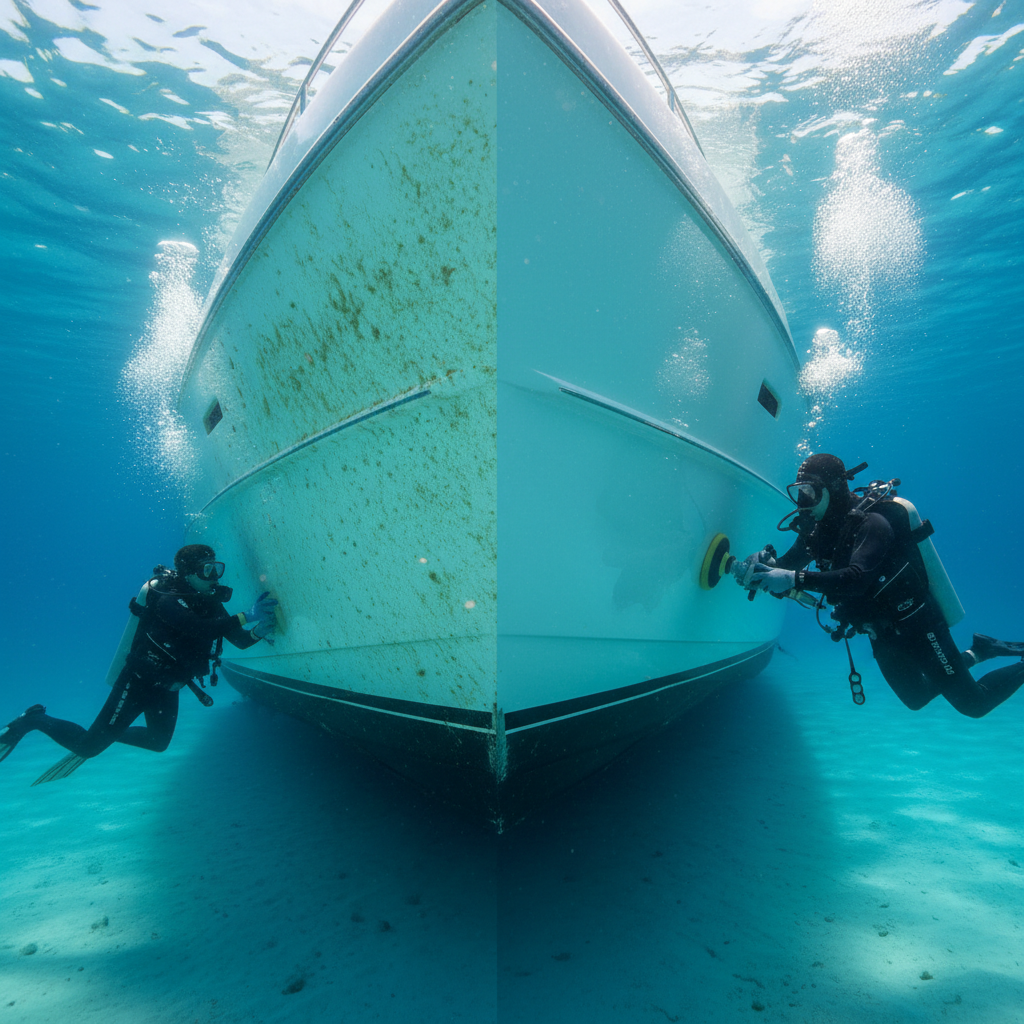
Step 2: Quantifying the Hull Roughness Penalty
Every millimeter of added roughness correlates directly to an increase in the energy required to push your boat through the water. While a 10% increase in roughness sounds negligible, it can lead to a staggering 40% increase in fuel consumption for planing hulls, according to research published by scientific reports on biofouling.
The real kicker? The cost of the extra fuel burned during a single trip to the Channel Islands often exceeds the cost of a professional underwater hull cleaning. For a typical Bay Area mid-market yacht owner, proactive fuel efficiency maintenance isn’t an expense—it’s an arbitrage play where you spend $200 to save $500 in diesel and engine wear.
| Fouling Level | Estimated Speed Loss | Fuel Increase |
|---|---|---|
| Clean / Polished | 0% | 0% |
| Light Slime (Micro-fouling) | 2-5% | 10-15% |
| Heavy Slime / Weed | 10% | 25-30% |
| Hard Growth (Barnacles) | 15%+ | 40%+ |
Need a professional eyes-on assessment? Schedule your photo-verified audit today to see exactly what’s slowing you down.
Step 3: Regional Calibration for Loch Lomond and Marina del Rey
A hull roughness audit must account for the specific chemical and biological makeup of your home port. The “Hidden Tax” of Loch Lomond is the rapid accumulation of freshwater biofilms that thrive in nutrient-rich runoff, whereas Marina del Rey boaters face aggressive calcium-based growth from saltwater barnacles.
Here’s the thing: California’s strict environmental regulations, such as those monitored by the EPA’s Vessel General Permit program, mean you cannot simply scrub your hull aggressively. Excessive scrubbing releases copper and zinc into the marina basin, which is why we utilize soft-tooling techniques that preserve your expensive antifouling paint while removing the drag-inducing slime.
What we see with many entrepreneurs and startup founders who keep boats in the Bay is a desire for “predictive maintenance.” By using the 3-step audit, you can time your haul-outs perfectly before the peak summer sailing season, ensuring you aren’t paying for a haul-out six months too early or six months too late.
Why Photo-Verification is the Gold Standard
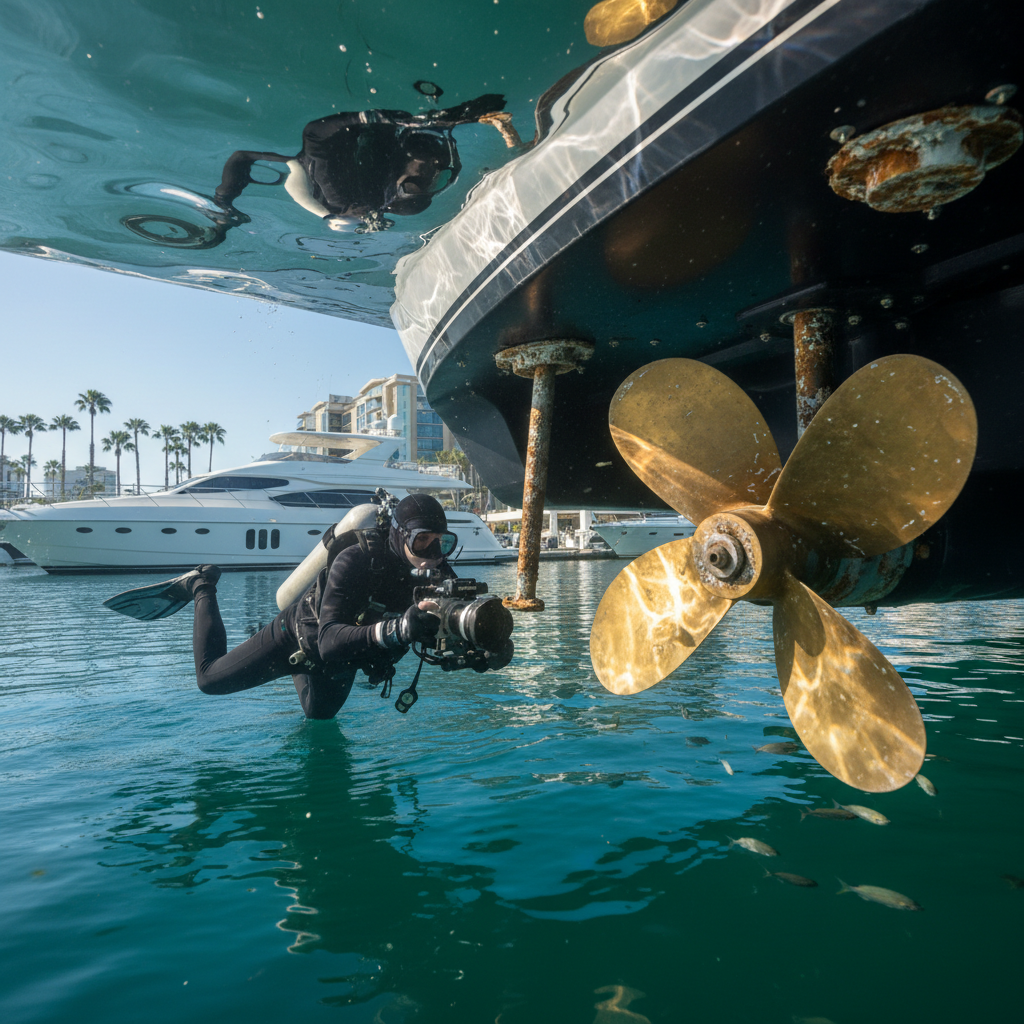
Trust is the most valuable currency in marine services, yet it’s often the hardest to find. At 360 Hull Diving, we believe you shouldn’t have to take a diver’s word for it. Every hull roughness audit we perform includes high-definition before-and-after photos of your running gear, zincs, and hull surface.
This transparency allows you to see the micro-fouling identification in real-time. If your props are covered in calcium but your hull is clean, we can adjust the service frequency to save you money. It’s about hydrodynamic drag reduction, not just checking a box. We’ve found that providing this level of detail helps owners at Loch Lomond and Marina del Rey maintain their vessel’s resale value by proving a consistent history of professional care.
The real surprise? Many owners find that their “engine trouble” or “vibration” was actually just a single barnacle on a propeller blade. Honest, regular inspections catch these issues before they turn into a $5,000 mechanic bill.
The ROI of Smoothness: A Business Case for Maintenance
For the growth-stage company executives we serve, time and efficiency are everything. A rough hull is a “shadow tax” on your leisure time. If your boat takes 20% longer to get to your destination, that is 20% less time spent enjoying the water. When you factor in the rising cost of marine fuel in California—often 30% higher than the national average—the ROI of a smooth hull becomes undeniable.
By implementing a fuel efficiency maintenance schedule based on our audit framework, you are also participating in environmental stewardship. Reducing drag lowers your carbon footprint, aligning your hobby with the sustainability goals many Bay Area professionals champion in their corporate lives.
Ready to reclaim your boat’s performance? Book a 360 Hull Diving inspection and get the photo proof your boat deserves.
Frequently Asked Questions
How often should I perform a hull roughness audit?
For most Bay Area boaters, we recommend a professional audit every 3-4 weeks. In high-growth saltwater environments like Marina del Rey, barnacles can reach maturity in as little as 21 days. In freshwater areas like Loch Lomond, the slime layer can become significant enough to impact fuel economy within a month.
Can I do a hull roughness audit myself from the dock?
While you can check the waterline, 90% of the hull is invisible from the surface. A true audit requires an underwater camera or a diver to inspect the keel, rudders, and running gear. Most micro-fouling starts near the light-penetrated areas of the hull that are hardest to see from above.
Does micro-fouling really affect fuel efficiency that much?
Yes. Industry data from the IMO and leading paint manufacturers suggests that even light slime increases drag by 10-15%. For a vessel burning 20 gallons per hour, that’s an extra 3 gallons of fuel wasted every hour you’re underway. Over a season, this adds up to thousands of dollars in wasted fuel.
What is the difference between a cleaning and an audit?
A cleaning is the physical removal of growth. An audit is a diagnostic process where we identify the type of fouling, assess the health of your antifouling paint, and provide photo-verification. This helps you determine if your current cleaning schedule is effective or if you are over-servicing your boat.
Actionable Takeaway: This week, check your fuel logs from your last three trips. If you notice a steady increase in fuel burn at your standard cruising speed, it’s time to stop guessing and start auditing. Your hull is likely fighting more drag than you realize.