📋 Table of Contents
- The Hidden Cost of Asymmetrical Trim Tab Deployment
- Why Digital Sensors Fail Without Underwater Actuator Inspection
- The 360 Hull Diving Protocol for Tiburon Marine Services
- NMEA 2000 Integration and Modern Vessel Attitude Control
- Sustainable Yachting: Minimizing Wake in Sensitive Zones
- The Corinthian Standard: A Benchmark for Fleet Performance
- FAQs
According to the EPA’s Clean Boating standards, even minor hull and hardware misalignments can lead to significant increases in local wake impact and fuel emissions. For members at the Corinthian Yacht Club, maintaining a vessel’s hydrodynamic balance isn’t just about speed; it’s about elite stewardship of the Raccoon Strait.
Trim tab synchronization is the often-overlooked foundation of a stable, efficient ride in the choppy waters off Tiburon. When your tabs are out of alignment, your boat fights itself, leading to lopsided fuel burn and unnecessary strain on your engines. Here is how we address the ‘hidden drag’ factor through professional underwater calibration.
The Hidden Cost of Asymmetrical Trim Tab Deployment
A mere 2-degree misalignment between your port and starboard tabs can increase fuel consumption by as much as 15% during cruising speeds. What most people miss is that your digital helm display might show 0%, but the physical reality underwater is often quite different due to mechanical creep or biofouling.
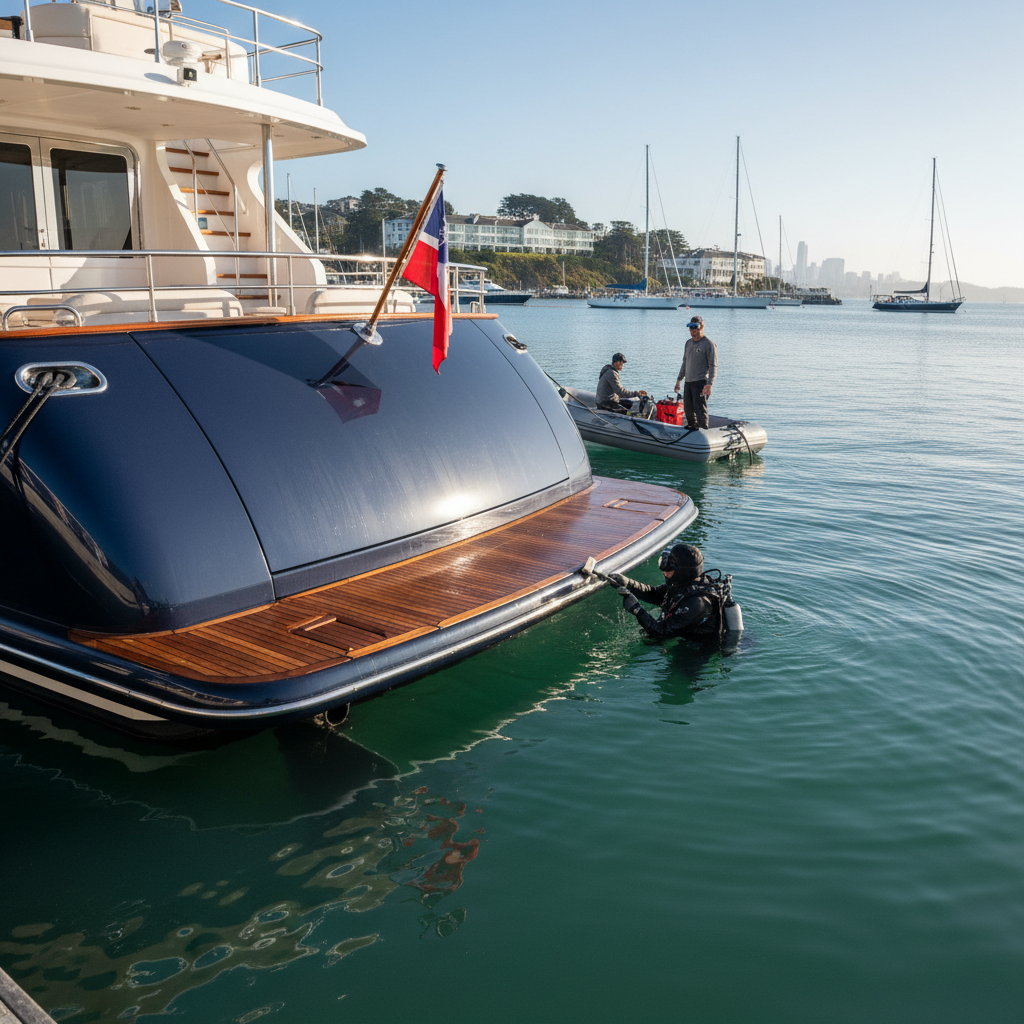
- Increased Hydrodynamic Drag: Asymmetrical tabs force the hull to track crab-wise, creating massive drag.
- Excessive Propeller Slip: When the boat leans, one prop works harder than the other, accelerating wear.
- Compromised Safety: In heavy Bay winds, improper trim tab synchronization can lead to unpredictable bow-steering.
The real kicker? Modern glass cockpits rely on sensors that don’t always account for physical obstructions. If you are noticing a slight list despite “centered” controls, it is time for a professional underwater actuator inspection.
Why Digital Sensors Fail Without Underwater Actuator Inspection
Digital accuracy is a hollow promise if the foundation—the physical actuator—is encrusted with Bay Area barnacles. In our work with high-performance Tiburon-based vessels, we frequently find that NMEA 2000 sensors report perfect alignment while the actual stainless steel plates are physically restricted by calcium deposits.
Here’s the thing: sensors measure the position of the internal piston, not the external plate. If your zincs are spent or biofouling has crept into the hinge, the plate may not retract fully. This creates a constant, invisible brake on your performance. We recommend a seasonal calibration to ensure your digital readout matches the physical reality beneath the waterline.
Ready to verify your performance? Schedule an underwater calibration today to ensure your vessel is running at peak efficiency.
The 360 Hull Diving Protocol for Tiburon Marine Services
Effective trim tab synchronization requires a hands-on approach that combines digital resetting with physical measurement. Our team provides specialized Tiburon marine services that focus on the intersection of mechanical integrity and hydrodynamic performance.
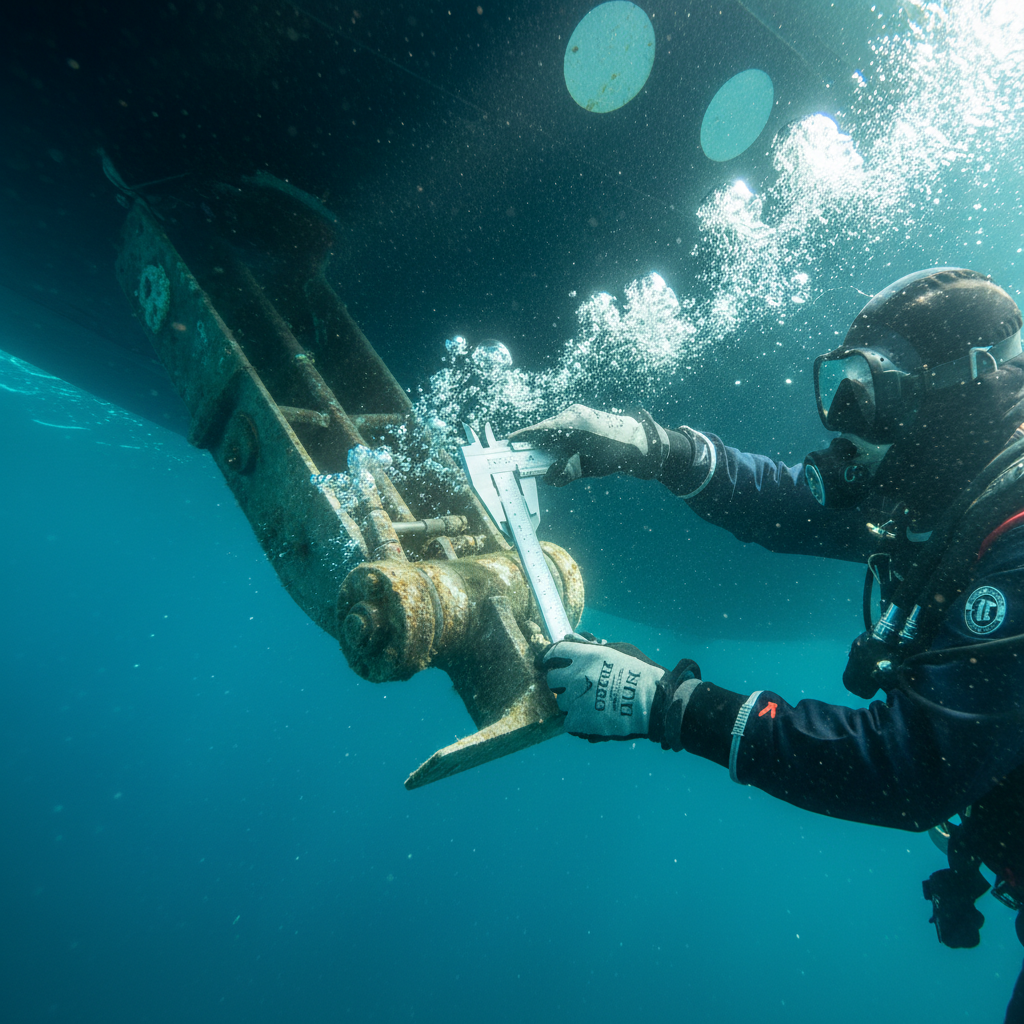
- Baseline Measurement: We measure the exact extension of each actuator at 0%, 50%, and 100% deployment.
- Biofouling Clearance: We meticulously clean the hinges and piston rams to ensure zero mechanical interference.
- Zinc Assessment: We check for galvanic corrosion on the tabs, which can pit the metal and alter water flow.
- Physical Zeroing: We manually assist the digital system in finding its true physical ‘home’ position.
But wait—there is a contrarian insight here: many owners over-grease their actuators. Excessive grease actually attracts silt from the Bay’s floor, creating an abrasive paste that grinds down seals faster than salt water alone. We advocate for clean, polished surfaces over heavy lubrication.
NMEA 2000 Integration and Modern Vessel Attitude Control
Modern yachting has moved toward automated vessel attitude control, where systems like Zipwake or Seakeeper intercept manual inputs to keep the boat level. However, these systems are only as good as their initial calibration. If the “zero point” is off by even a fraction, the automated system will constantly hunt for stability, burning more power and wearing out your batteries.
For Corinthian fleet consistency, we recommend integrating your underwater findings with your NMEA 2000 network. According to NMEA standards, data integrity is the primary driver of marine safety. By providing your system with accurate physical data, you reduce the workload on your autopilot and trim controllers.
Seasonal Calibration Checklist for Bay Area Marinas
| Component | Check Frequency | Action |
|---|---|---|
| Actuator Seals | Monthly | Visual underwater inspection for leaks | Quarterly | Physical measurement vs. helm display |
| Anode Health | Bi-Monthly | Replace if more than 50% consumed |
| Biofouling | Monthly | Scrape hinges to prevent motor strain |
Sustainable Yachting: Minimizing Wake in Sensitive Zones
What most people miss is that trim tab synchronization is a key component of sustainable yachting. A boat that sits level in the water produces a cleaner wake. In sensitive harbor zones around Tiburon and Belvedere, a misaligned boat creates a larger, more destructive displacement wave that erodes shorelines and disturbs local wildlife.
The real kicker? By optimizing your hydrodynamic balance, you’re not just saving money on diesel; you’re reducing the carbon footprint of every trip to Angel Island. We take pride in helping our clients achieve this balance through precise underwater actuator inspection and maintenance. Our internal AI content engine, Ingest.blog, helps us track these environmental trends to keep our clients informed on the latest green marine tech.
Need a hand with your seasonal maintenance? Call us at (415) 555-0199 for a free consultation on your hull’s performance.
The Corinthian Standard: A Benchmark for Fleet Performance
As a member of the Corinthian Yacht Club, your vessel is a reflection of a long-standing tradition of maritime excellence. Achieving the “Corinthian Standard” means your boat should be as technically sound as it is aesthetically pleasing. Proper trim tab synchronization ensures that when you’re out on the Bay, your vessel’s attitude is aggressive, efficient, and perfectly poised.
Don’t let hidden drag slow you down or increase your costs. A small investment in professional underwater calibration pays dividends in fuel savings and mechanical longevity. We provide before-and-after photo proof with every service, so you never have to guess about the state of your running gear.
Take Action This Week: Next time you are at the dock, fully deploy your tabs and walk to the swim platform. If one side looks even slightly lower than the other, or if you see a line of growth along the hinge, book a professional dive service before your next weekend cruise.
Frequently Asked Questions
How often should I have my trim tabs inspected underwater?
In the high-growth environment of the San Francisco Bay, we recommend a professional underwater actuator inspection every 4-8 weeks. This ensures that barnacles do not jam the hinges and that your zinc anodes are providing adequate corrosion protection for the stainless steel plates.
Can I calibrate my trim tabs myself from the helm?
You can perform a digital reset, but without someone in the water measuring the actual plate movement, you are only calibrating the sensor, not the hardware. Physical trim tab synchronization requires verifying that the port and starboard plates are at the exact same angle relative to the transom.
Why does my boat list to one side even when the tabs are retracted?
This is often caused by “hidden drag.” One tab may not be retracting fully due to biofouling or a failing actuator. Even a half-inch of protrusion can create enough lift or drag to cause a noticeable list at cruising speeds, requiring professional Tiburon marine services to rectify.
Do trim tabs affect fuel economy at low speeds?
Generally, trim tabs are most effective at planing speeds. However, synchronized tabs help maintain a level attitude in displacement mode, which reduces the size of your wake and minimizes engine strain when navigating the restricted speed zones around Tiburon marinas.