📋 Table of Contents
According to the Journal of Marine Science and Engineering, cavitation-induced erosion can degrade propeller efficiency by as much as 10% before a captain even notices a change in vibration. For boaters navigating the tight fairways of Brisbane Marina or Manly Harbour, failing to address bow thruster cavitation doesn’t just mean a louder dockside maneuver—it signals the slow, microscopic destruction of your thruster blades.
Key Takeaways for Brisbane Cruisers:
- Identify microscopic pitting before it leads to structural blade failure.
- Understand how Brisbane’s high silt levels accelerate hydrodynamic drag.
- Learn to verify thruster health underwater without the $2,000+ cost of a haul-out.
- Discover why seasonal barnacle blooms in Moreton Bay are the primary trigger for cavitation.
1. The Science of Silence: Identifying Bow Thruster Cavitation
Cavitation isn’t just noise; it is the physical implosion of vapor bubbles against your blades with enough force to chip away solid bronze or composite material. In the warm, nutrient-rich waters of Brisbane, even a light layer of biofouling can disrupt laminar flow, triggering these destructive bubbles.
What most people miss: The “growl” you hear when engaging your thruster at Rivergate Marina isn’t always mechanical—it’s often the sound of water boiling at room temperature due to pressure drops. This local phenomenon is exacerbated by the high turbidity found in the Brisbane River, where suspended particles act as nuclei for bubble formation.
- Auditory Signature: A sharp, crackling sound similar to gravel being thrown against the hull.
- Performance Lag: A noticeable delay between motor engagement and lateral movement.
- Vibration: New or increased shuddering in the forward cabin during docking.
The Hidden Drag Factor in Moreton Bay
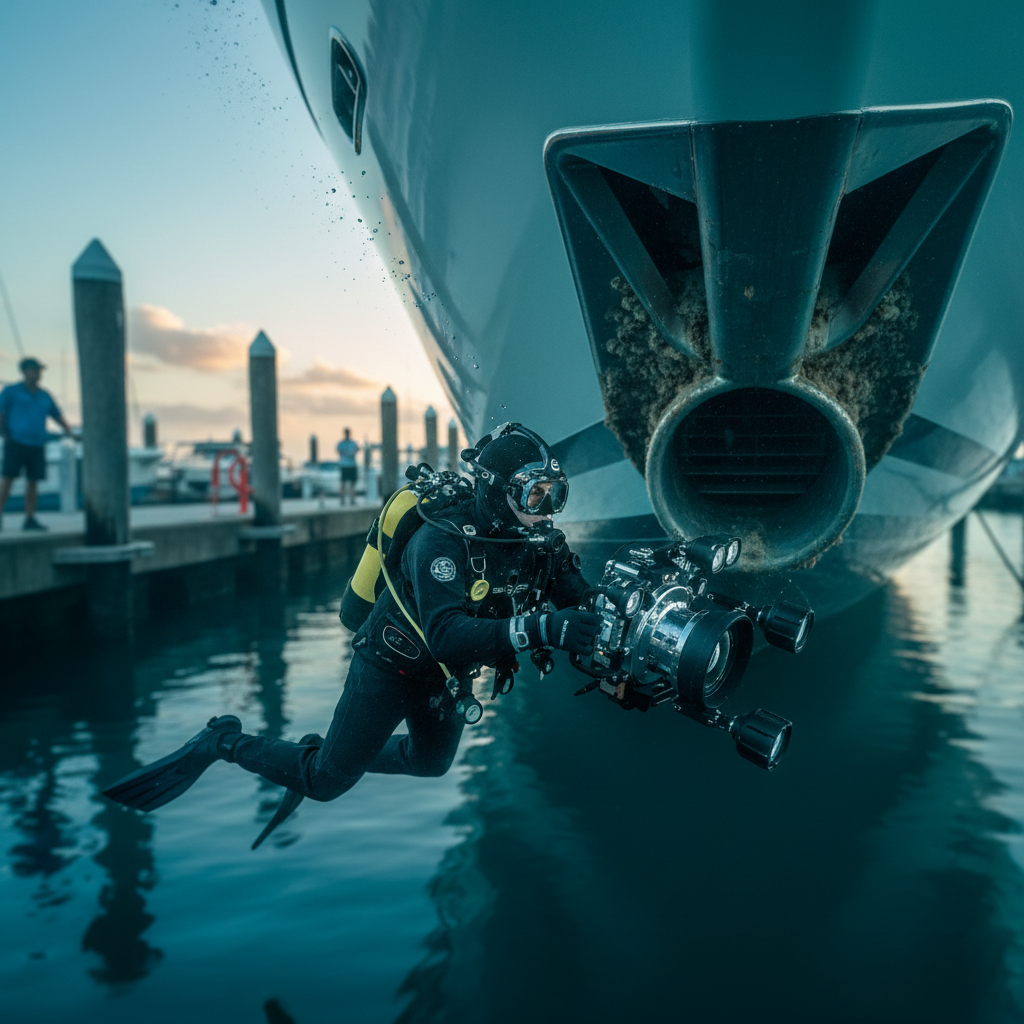
Brisbane’s seasonal barnacle blooms create a “hidden drag” that most owners ignore until their thruster stops pushing entirely. When a single barnacle attaches to the leading edge of a thruster blade, it creates a turbulent wake. This turbulence is the primary catalyst for bow thruster cavitation, leading to rapid propeller blade erosion.
Here’s the thing: waiting for your annual haul-out to check these blades is a gamble. By the time you’re in the slings at a local shipyard, the pitting may be deep enough to require a full blade replacement rather than a simple polish. For a typical luxury cruiser in San Francisco Bay or Brisbane, proactive underwater blade inspection is the only way to catch this early.
2. The 3-Step Thruster Performance Audit
A professional thruster performance audit should be systematic, transparent, and documented with high-resolution imagery. At 360 Hull Diving, we’ve refined this process to ensure Brisbane boat owners have total clarity on their vessel’s underwater health.
Step 1: Visual Pitting Assessment
Our divers look for “moon-cratering” on the blade tips. This microscopic pitting is a definitive sign that cavitation is occurring. We use specialized underwater cameras to provide before-and-after photo proof, allowing you to see the state of your bronze or composite blades from the comfort of your salon.
Step 2: Tunnel and Grate Clearance
We inspect the thruster tunnel for biofouling and debris. In the Brisbane River, we often find micro-impact damage from small pieces of driftwood or flood debris that has become wedged in the protective grates. Even a small obstruction can reduce water intake, forcing the thruster to work harder and increasing the likelihood of cavitation.
Step 3: Zinc and Hardware Integrity
Corrosion often mimics cavitation damage. We verify that your thruster anodes are properly bonded and have enough mass to protect the gear leg. If you’re noticing white powdery deposits, your zinc protection may be failing, leaving your expensive thruster assembly vulnerable to galvanic attack.
Ready to see what’s happening under your waterline? Schedule your professional dive audit today and get the photo proof you need.
3. Biofouling and the Brisbane Silt Factor
Brisbane’s marinas are notorious for rapid growth due to the combination of warm water temperatures and agricultural runoff into the river. This environment makes underwater hull cleaning in Brisbane a monthly necessity rather than a seasonal luxury.
| Feature | Impact of Silt/Growth | Cavitation Risk |
|---|---|---|
| Blade Surface | Increases friction/drag | High |
| Tunnel Diameter | Reduced water flow | Moderate |
| Gear Leg Anodes | Rapid depletion | Critical |
But wait—don’t assume that just because your hull looks clean, your thruster is safe. The internal geometry of a bow thruster tunnel creates a perfect, low-flow environment for barnacles to thrive, even when the rest of the boat is relatively clean. This is why a dedicated underwater blade inspection is a critical component of any maintenance plan.
4. Predictive Maintenance vs. Emergency Haul-Outs
The real kicker? Most boat owners spend thousands on emergency repairs that could have been avoided with a $200 diver check. In our work with high-net-worth owners at Emeryville and Brisbane marinas, we consistently find that monthly inspections extend the life of thruster components by years.
Consider the current state of local shipyards. Wait times for a haul-out in Moreton Bay can stretch for weeks during peak season. A proactive bow thruster cavitation audit allows you to stay in the water and keep cruising while others are stuck on the hard. Using our internal AI content engine, Ingest.blog, we track these maintenance trends to ensure our clients have the most up-to-date advice on marine longevity.
- Cost Comparison: A monthly dive service is a fraction of the cost of a single day of dry-docking.
- Transparency: Insist on photo proof. If your diver can’t show you the blades, they haven’t inspected them.
- Insurance: Regular documented inspections can assist in insurance claims if a mechanical failure occurs.
5. Solving the “Silent Maneuvering” Problem
Vibration issues often plague marina residents at night, especially in quiet pockets like Manly. If your thruster feels like it’s shaking the whole boat, it’s likely out of balance due to uneven fouling or cavitation-induced metal loss. According to the EPA’s Vessel General Permit guidelines, maintaining a smooth hull and propeller surface is also a key factor in reducing underwater noise pollution.
What most people miss: You can’t just “power through” cavitation. Increasing the RPMs only increases the rate of erosion. The only solution is to restore the hydrodynamic profile of the blades through professional cleaning and polishing. This is a standard part of our Brisbane marine services package.
The real takeaway: If you haven’t had a diver look at your thruster in the last 60 days, you’re likely losing performance. Don’t wait for the growl to become a bang. Contact 360 Hull Diving for a comprehensive thruster audit and keep your maneuvers silent and strong.
Frequently Asked Questions
What does bow thruster cavitation sound like?
Cavitation typically sounds like a loud, sharp crackling or grinding noise, often compared to gravel or marbles spinning in a blender. This occurs when vacuum bubbles implode against the thruster blades. If you hear this, it’s a sign that your blades are being physically eroded and require an immediate underwater blade inspection.
Can I clean my bow thruster blades myself?
While some owners attempt DIY cleaning, it is generally discouraged. Thruster tunnels are confined spaces with sharp edges and moving parts. Professional Brisbane marine services use specialized tools to remove calcium deposits without scratching the blade surface, which would otherwise create new sites for cavitation to begin.
How often should I have a thruster performance audit?
In high-growth areas like Moreton Bay or Brisbane River, we recommend a visual audit every 2-3 months. This frequency ensures that barnacle growth is cleared before it triggers bow thruster cavitation. For vessels that remain stationary for long periods, monthly checks are preferred to prevent heavy biofouling.
Does insurance cover cavitation damage?
Most marine insurance policies view cavitation as a “wear and tear” issue rather than an accidental loss. This makes proactive maintenance even more critical. Documenting your thruster performance audit with photos can help prove that you have exercised due diligence in maintaining the vessel’s seaworthiness.