
📋 Table of Contents
- The High Stakes of Engine Cooling Maintenance in SF Bay
- Step 1: Visual Inspection and Biofouling Assessment
- Step 2: Precision Mechanical Clearing and Preservation
- Step 3: Internal Strainer and Flow Verification
- Why South Beach Harbor Requires a Unique Approach
- The Sustainable Sailor: Compliance and Performance
- FAQs
A single plastic bag or a cluster of stubborn San Francisco Bay barnacles can trigger a $10,000 heat exchanger failure in less time than it takes to cruise from South Beach Harbor to the Golden Gate Bridge. According to 2024 marine insurance industry observations, cooling system failures remain a leading cause of preventable engine room fires and catastrophic mechanical breakdowns for recreational vessels.
For boaters docked at South Beach Harbor, the risks are uniquely elevated. The proximity to urban runoff and the specific tidal flushing patterns of the Embarcadero waterfront create a nutrient-rich environment where biofouling thrives. If you aren’t prioritizing intake grate clearing, you aren’t just risking a missed weekend at Angel Island; you’re risking the structural integrity of your propulsion system. This guide breaks down our professional 3-step framework to keep your raw water flowing and your temperatures stable.
The High Stakes of Engine Cooling Maintenance in SF Bay
The real kicker? Most boaters don’t realize their intake is restricted until the high-temperature alarm screams while they are fighting a 3-knot ebb tide in the shipping channel.
- Urban Runoff Acceleration: South Beach Harbor sits at a nexus of city drainage, which introduces nitrates that act like fertilizer for marine growth.
- Silt and Sediment: The shallow nature of the harbor means silt often settles into external grates, creating a cement-like substrate for barnacles.
- Thermal Stress: Modern turbocharged diesel engines have very narrow operating temperature margins; even a 15% reduction in flow can cause localized hotspots.
What most people miss is that engine cooling maintenance isn’t just about the internal impeller. It starts under the waterline. When we work with typical Bay Area mid-market recreational vessels, we often find that the external grates are 50% occluded, yet the owners were only checking the internal strainers. This is a recipe for cavitation and pump failure.
Step 1: Visual Inspection and Biofouling Assessment
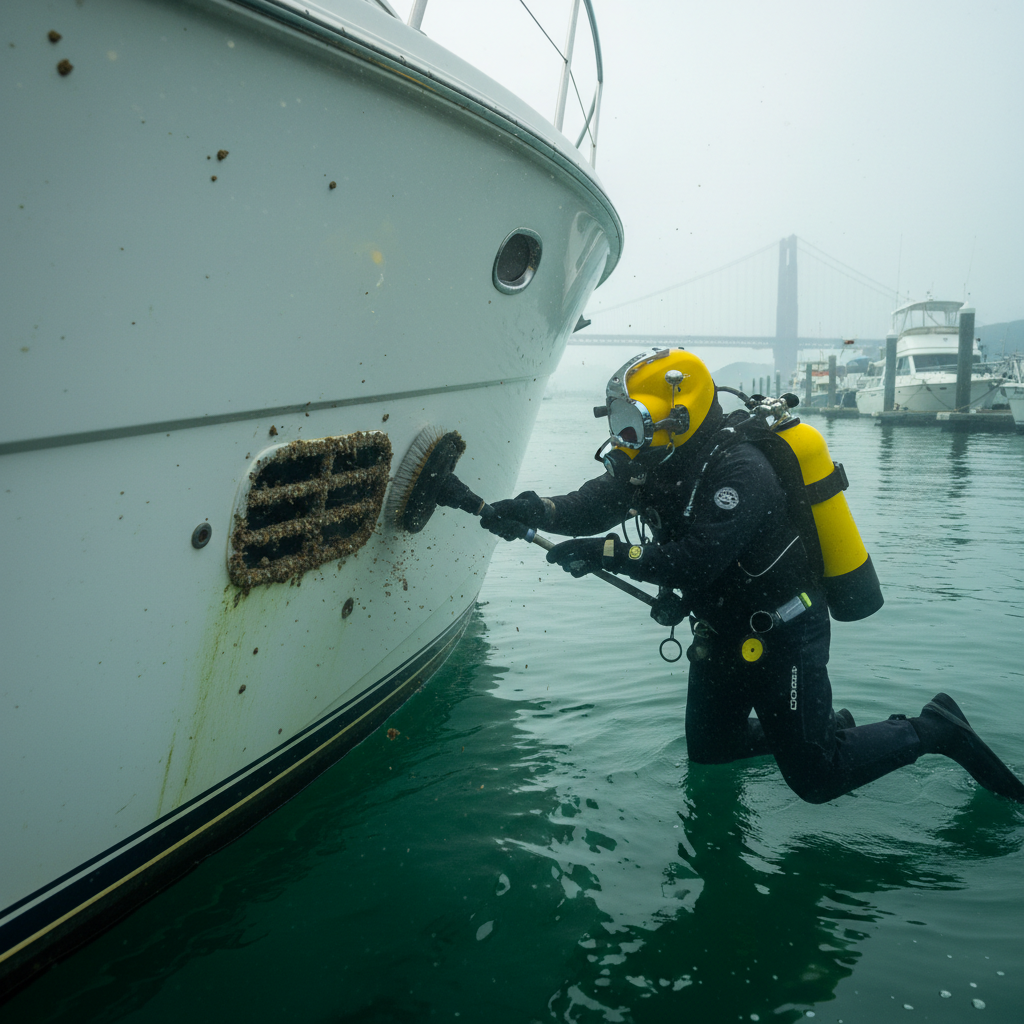
Effective South Beach Harbor boat care starts with a baseline understanding of what is growing on your hull before you ever turn the key.
Here’s the thing: visibility in the South Beach basin can vary from three feet to three inches depending on the tide. We utilize high-lumen underwater lighting and, occasionally, ROV (Remotely Operated Vehicle) technology to get a clear view of the intake geometry. We aren’t just looking for “growth”; we are identifying the species. Is it soft bryozoans or hard-shell acorn barnacles? The latter requires a much more aggressive mechanical approach to ensure the apertures are fully cleared.
For the sustainable sailor, this step is critical for compliance. The EPA’s Vessel General Permit guidelines emphasize minimizing the transport of invasive species. By identifying growth early, we can remove it before it reaches a reproductive stage, keeping your boat compliant with California’s strict biofouling regulations.
Local Indicators for South Beach Owners
- Tidal Debris: If you see heavy kelp accumulation on the windward side of Pier 40, your intakes likely need a check.
- Water Clarity: Use the Oracle Park pilings as a gauge; if you can’t see the growth on the docks at 2 feet depth, you need a professional diver’s eyes on your grates.
- Seasonal Spikes: Between May and September, SF Bay water temperatures rise, doubling the rate of calcified growth.
Step 2: Precision Mechanical Clearing and Preservation
The goal of intake grate clearing is to restore 100% flow without scouring away the expensive anti-fouling coatings that protect your bronze fittings.
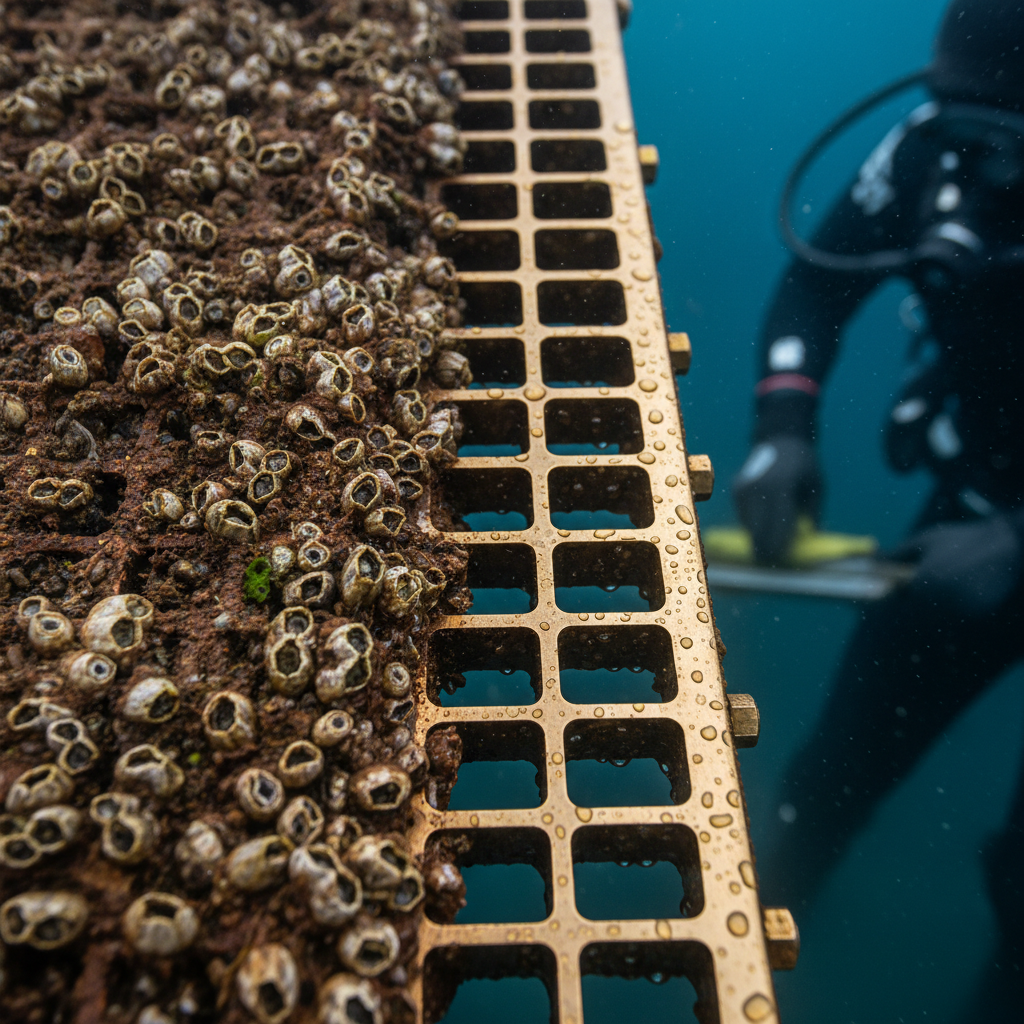
But wait—many DIY owners make the mistake of using heavy metal scrapers that gouge the metal. These scratches actually provide a better “anchor” for the next generation of barnacles to latch onto. Our team uses specialized non-abrasive polymer tools and surgical-grade scrapers to pop the growth off the surface without damaging the substrate. We focus specifically on the interior “lips” of the grate slots where growth hides from casual inspections.
In our work with high-performance yacht owners in the Bay, we’ve found that maintaining the integrity of the grate coating can extend the interval between cleanings by up to 30%. This is the difference between a reactive fix and a proactive strategy. If you’re concerned about your flow, you can schedule a professional grate inspection to see the before-and-after proof we provide with every service.
| Method | Pros | Cons |
|---|---|---|
| DIY Scraper | Low cost | Heavy coating damage, incomplete clearing |
| Chemical Flush | Cleans internals | Does nothing for external grate blockage |
| Professional Diver | 100% flow restoration | Requires scheduled maintenance |
Step 3: Internal Strainer and Flow Verification
The framework isn’t complete until we verify that the clear path outside translates to high-volume flow inside the engine room.
Once the external intake grate clearing is finished, we move to the internal raw water strainers. It is common for small fragments of shells to get sucked into the basket during the cleaning process or during normal operation. We pull these baskets, clear any secondary debris, and inspect the seals. A common point of failure we see in typical Bay Area mid-market cruisers is a cracked strainer lid or a dry-rotted O-ring that allows air to enter the system, causing the pump to lose prime.
The final check? A “bucket test” or observing the exhaust water flow at startup. You want a steady, rhythmic thumping of water, not a misty spray. This verification ensures your engine cooling maintenance was successful and you are ready for a run to the Farallon Islands. For more tips on maintaining your vessel’s vitals, check out our guide on zinc and corrosion protection.
Why South Beach Harbor Requires a Unique Approach
One honest, contrarian insight: Most “standard” hull cleaning schedules are too infrequent for South Beach Harbor’s specific micro-climate.
While a boat in a deep-water slip in Tiburon might stay clean for 4-5 weeks, the combination of shallow water, higher temperatures near the city shore, and urban nutrients means South Beach boats often need intake checks every 3 weeks during the summer. We’ve seen owners try to save money by pushing cleanings to 8-week intervals, only to spend $2,000 on a towed-in service call when their engines overheated at the Bay Bridge.
What most people miss: The “Zero-Clog” strategy involves aligning your diver’s visits with the peak of the spring tide cycles. This ensures that the heavy silt moved by the tides is cleared away before it has a chance to harden. To stay ahead of the curve, you can browse our hull cleaning guides for more localized advice.
The Sustainable Sailor: Compliance and Performance
Maintaining your boat in the San Francisco Bay means navigating a complex web of environmental regulations from the California State Water Resources Control Board.
Using a professional, insured dive team ensures that your underwater hull cleaning San Francisco is done using Best Management Practices (BMPs). We focus on mechanical removal that minimizes the release of copper and other heavy metals into the water column. This isn’t just about being eco-friendly; it’s about protecting your ability to boat in the Bay as regulations tighten. Proper marine growth prevention through regular mechanical clearing is the most effective way to stay compliant while ensuring engine reliability.
Ready to ensure your next cruise is worry-free? Don’t wait for the temperature alarm to tell you there’s a problem. Contact 360 Hull Diving today for a comprehensive intake inspection and clearing service. We provide photo proof of every job, so you can see exactly what was blocking your flow.
Frequently Asked Questions
How often should I have my intake grates cleared at South Beach Harbor?
In the South Beach basin, we recommend a 3-week interval during the summer (May–October) and a 4-week interval during the winter. The high nutrient levels from urban runoff accelerate growth significantly compared to other parts of the Bay, making frequent checks essential for engine safety.
Can I clear my own intake grates with a brush from the dock?
It is rarely effective. Most intake grates are located deep under the hull or behind keels where a dock brush cannot reach at the correct angle. Furthermore, brushing often pushes debris further into the grate slots rather than removing it, leading to a more severe raw water strainer blockage inside.
What are the signs that my intake is partially blocked?
Watch your temperature gauges closely. If you notice your engine running 5-10 degrees hotter than usual at cruising RPM, or if your exhaust water looks “steamy” or diminished, you likely have an intake restriction. This is a critical warning sign of SF Bay biofouling impacting your cooling system.
Does 360 Hull Diving provide proof of the clearing?
Yes. We provide before-and-after photo or video documentation for every intake grate clearing service. This transparency is part of our commitment to South Beach Harbor owners, ensuring you have peace of mind knowing your cooling system is fully unobstructed before you head out on the water.
Take action this week: Check your engine room logs. If it has been more than 30 days since your last professional dive service, take 5 minutes to inspect your internal strainers. If you see any shell fragments or grass, it’s a definitive sign that your external grates are compromised. Schedule your dive service now to prevent a mid-water emergency.