
📋 Table of Contents
According to the San Francisco Estuary Institute, the Bay’s unique flushing patterns can cause biofouling to accumulate 30% faster during low-flow years. For owners at the East or West Harbor, a San Francisco Marina hull assessment isn’t just a chore; it’s a critical financial safeguard against escalating fuel costs and hardware failure.
Key Takeaways for SF Slip Holders:
- Identify early-stage calcium buildup before it requires aggressive scraping.
- Monitor zinc depletion rates influenced by the Marina’s high-current environment.
- Ensure compliance with California SB 623 copper paint regulations.
- Verify running gear integrity to prevent mid-Bay propulsion issues.
1. Bottom Growth Evaluation: Spotting the ‘Hard’ Signs Early
The first sign of a neglected hull isn’t usually a barnacle; it’s a subtle slime layer that acts as a magnetic substrate for more destructive species. In the San Francisco Marina, the rapid tidal exchange brings a constant buffet of nutrients to your hull, accelerating bottom growth evaluation needs.
What most people miss: Soft growth (algae) is often ignored, but it hides the colonization of Undaria pinnatifida (invasive kelp), which can wrap around shafts and restrict intake flow. Here’s what to look for during a visual check from the dock:
- The Waterline Shadow: If you see a dark ‘beard’ at the waterline, your intake grates are likely already 50% restricted.
- Texture Changes: A transition from smooth slime to ‘sandpaper’ feel indicates calcium-based tubeworms are taking root.
- Color Shifts: Bright greens are common, but brown, leathery patches often signal invasive species that require immediate professional removal.
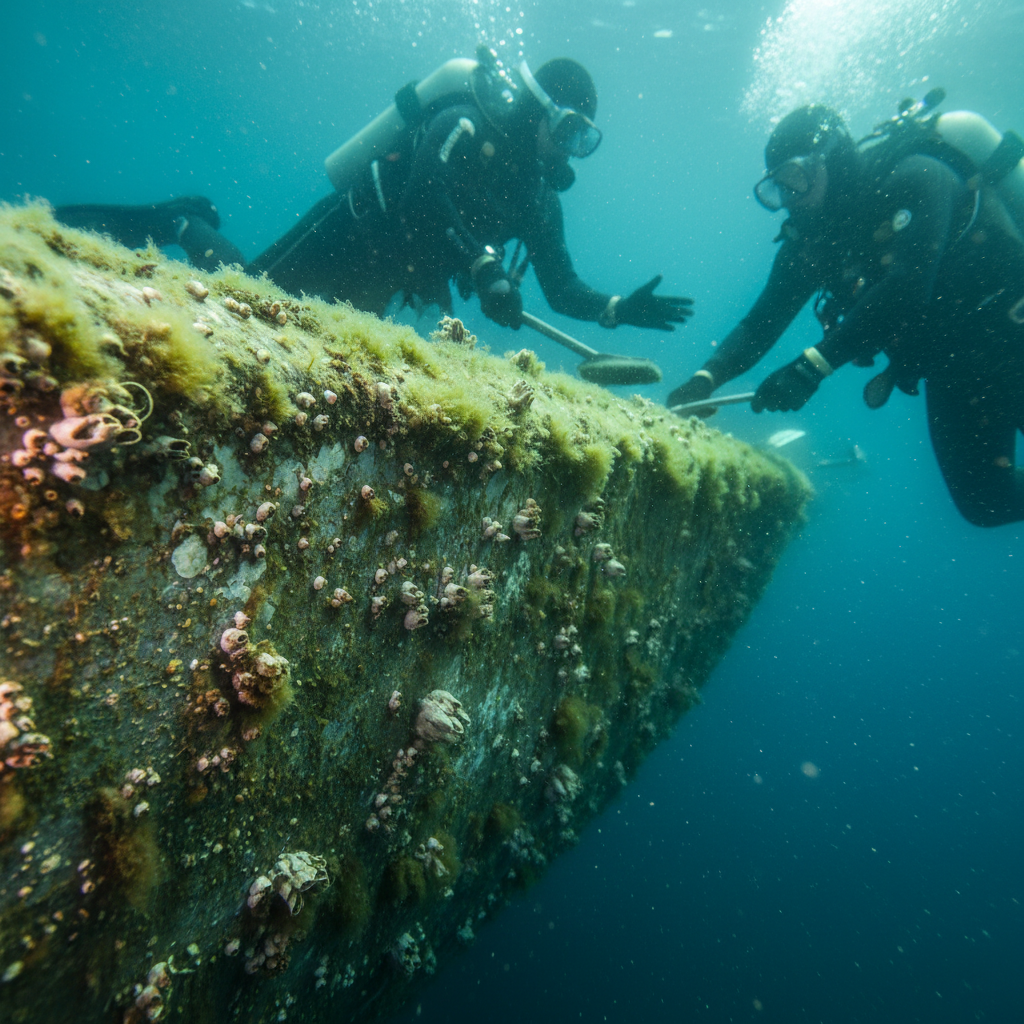
The real kicker? Waiting until you feel vibration in the steering means the growth has already moved from your hull to your running gear. For a professional look at what’s happening beneath the surface, you can explore our cleaning standards to see how we handle sensitive Bay ecosystems.
2. Zinc Anode Replacement: The Bay’s Silent Battery
In a high-salinity environment like the San Francisco Bay, your sacrificial anodes are the only thing standing between the Bay and your expensive bronze propellers. A San Francisco Marina hull assessment must prioritize zinc health because the stray current in older marina docks can eat through protection faster than expected.
The industry-standard advice is to replace zincs at 50% wear, but in the SF Marina, we recommend a 40% threshold due to the high-velocity currents that can accelerate erosion. We often see a typical Bay Area mid-market vessel owner lose an entire prop nut zinc in just three months due to localized electrolysis issues.
Why Zinc Timing Matters:
- Pitting Prevention: Once zincs are gone, the Bay starts ‘eating’ your through-hulls and shafts.
- Bonding System Health: Rapid zinc loss is often a ‘canary in the coal mine’ for internal electrical leaks.
- Cost Avoidance: Replacing a $30 zinc is significantly cheaper than a $3,000 propeller re-pitching.
Need a professional to check your levels? Schedule your free estimate and get photo proof of your anode condition.
3. Running Gear Inspection: Propulsion and Safety
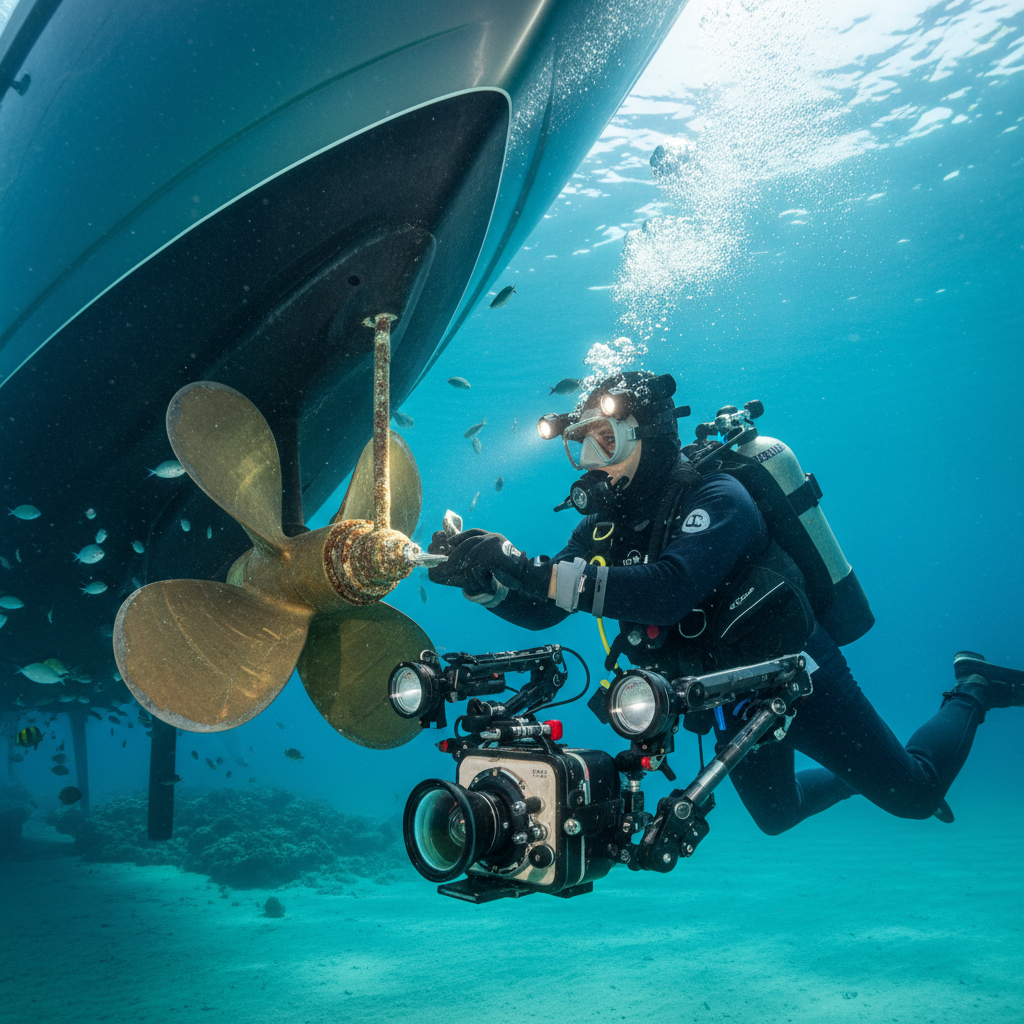
Your running gear is the heart of your vessel, and in the choppy waters outside the Golden Gate, reliability is a safety requirement. A proper marina slip maintenance routine includes checking the propeller, shaft, and struts for more than just growth.
Here’s a contrarian insight: Most owners think a ‘clean’ prop is a ‘good’ prop. However, we’ve found that even a clean-looking prop can have ‘pink’ spots—a sign of de-zincification where the metal is becoming brittle and porous. This is why high-definition underwater photography is non-negotiable for serious owners.
- Propeller Condition: Check for dings or ‘curls’ on the edges that cause cavitation.
- Shaft Play: Ensure the cutlass bearing hasn’t developed excessive movement.
- Intake Clarity: Verify that the cooling water intakes are 100% free of bryozoans.
According to the EPA’s Vessel General Permit guidelines, maintaining a smooth hull and clean running gear can improve fuel efficiency by up to 15%. For SF commuters, this translates to hundreds of dollars saved monthly.
4. Anti-Fouling Paint Compliance and Condition
California’s regulatory landscape is shifting, and San Francisco Marina hull assessment now requires an eye for paint integrity and type. With the implementation of SB 623, there is a significant push toward non-biocide or low-copper coatings to protect the Bay’s water quality.
In our work with local yacht club members, we’ve seen that many ‘standard’ bottom jobs are failing prematurely because owners aren’t aware of how the Bay’s brackish mix affects paint adhesion. If your paint is ‘chalking’ (releasing a cloud of color when touched), you are likely losing your protection—and potentially violating San Francisco Bay Regional Water Quality Control Board standards.
The 4-Point Paint Checklist:
- Adhesion: Look for flaking or ‘alligatoring’ near the waterline.
- Thickness: Identify high-wear areas like the bow and leading edges of the keel.
- Smoothness: Excessive ‘orange peel’ texture increases drag and fuel consumption.
- Eco-Status: Ensure your diver uses ‘soft-cleaning’ techniques to preserve the remaining biocide.
The real value of a documented assessment? Resale value. A boat with a three-year history of monthly dive reports and photo-documented marina slip maintenance commands a premium in the competitive San Francisco market.
Seasonal Adjustments: The Rainy Season Shift
The real kicker for SF Marina residents is the winter rainy season. Increased freshwater runoff from the Sacramento Delta changes the salinity of the Marina, which can actually increase certain types of aggressive growth while slowing others. Your San Francisco Marina hull assessment should happen more frequently during these transitions to catch ‘bloom’ events.
| Season | Growth Risk | Zinc Depletion | Action Item |
|---|---|---|---|
| Spring/Summer | High (Barnacles) | Moderate | Monthly Cleaning |
| Fall/Winter | Moderate (Slime/Kelp) | High (Stray Current) | Zinc Check every 45 days |
If you’re prepping for the racing season or just want piece of mind before a trip to Drake’s Bay, a systematic check is your best tool. At 360 Hull Diving, we provide before-and-after photo proof with every service, ensuring you never have to guess what’s happening under your boat. Learn more about our specialized zinc services.
FAQs
How often do I really need a San Francisco Marina hull assessment?
Standard practice for the San Francisco Marina is every 3 to 4 weeks. The high nutrient levels and tidal flow in the Bay mean that waiting longer than 30 days often allows ‘hard growth’ like barnacles to cement themselves, which requires more aggressive cleaning that can damage your anti-fouling paint.
Does the 4-point framework change for racing sailboats?
Yes, for racing vessels, the assessment shifts focus toward surface friction and ‘burnishing’ the paint. We look for micro-fouling that cruisers might ignore but can cost a racer seconds per mile. We also prioritize the leading edges of the keel and rudder for absolute smoothness during the pre-regatta check.
Can I perform a bottom growth evaluation myself from the dock?
You can spot ‘waterline beards’ and growth on the upper rudder, but 90% of critical issues—like intake blockage or shaft electrolysis—occur where you can’t see them. A professional diver with high-definition cameras is the only way to get a complete 4-point assessment that holds up for insurance or resale purposes.
What is the impact of SB 623 on my hull maintenance?
SB 623 limits the leach rate of copper in anti-fouling paints. This means modern paints are often ‘softer’ or less toxic, requiring a more gentle touch from your diver. Our framework emphasizes ‘soft-cleaning’ techniques that remove growth without scrubbing away the expensive protective layers of your paint.
Don’t let the Bay’s hidden environment compromise your vessel’s performance or safety. This week, take ten minutes to walk your slips and check for the ‘waterline shadow.’ If you see growth at the top, it’s time for a professional deep dive. Ready for a transparent, photo-documented service? Contact 360 Hull Diving today for your comprehensive San Francisco Marina hull assessment.