
📋 Table of Contents
A local yachtsman recently spent $12,000 upgrading his Garmin suite at Pier 32 Marina because his Pier 32 Marina boat speed readouts were ‘lagging’ by three knots. He didn’t have an electronics problem; he had a $200 barnacle problem hiding on his intake grates that was costing him $15,400 in annual fuel and engine strain.
The Phantom Knot: Why Your GPS Calibration Error is a Lie
Most boaters believe that if the GPS says they are moving at 18 knots, but the boat feels like it’s dragging through molasses, the sensor must be out of sync. What most people miss is that your GPS measures Speed Over Ground (SOG), but your engine is fighting Speed Through Water (STW), and that gap is where your money disappears.
- The Friction Factor: Even a thin layer of slime increases your hull drag coefficient by up to 20%.
- The Sensor Trap: A fouled paddlewheel creates a GPS calibration error that leads owners to over-throttle, burning diesel at an exponential rate.
- The Pier 32 Micro-Climate: The specific salinity in South San Diego Bay acts like a greenhouse for micro-fouling.
Here’s the thing: you can’t calibrate your way out of physics. When 1mm of hard growth attaches to your running gear, it disrupts the laminar flow, leading to propeller cavitation erosion that no software update can fix.
The $15,400 Math: Calculating the Marine Biofouling Fuel Penalty
The ‘Speed Trap’ isn’t a fine from the harbor master; it’s the cumulative tax you pay for ignoring what’s under the waterline. For a 45-foot sportfisher operating 100 hours a year, a 15% loss in efficiency due to hull drag results in staggering costs over a 3-year ownership cycle.
| Expense Category | Clean Hull (Annual) | Fouled Hull (Annual) | 3-Year ‘Speed Trap’ Cost |
|---|---|---|---|
| Fuel Consumption | $8,200 | $11,480 | $9,840 Excess |
| Engine Wear/Maintenance | $2,500 | $4,000 | $4,500 Excess |
| Zinc/Anode Depletion | $400 | $750 | $1,050 Excess |
| Total Penalty | — | — | $15,390 |
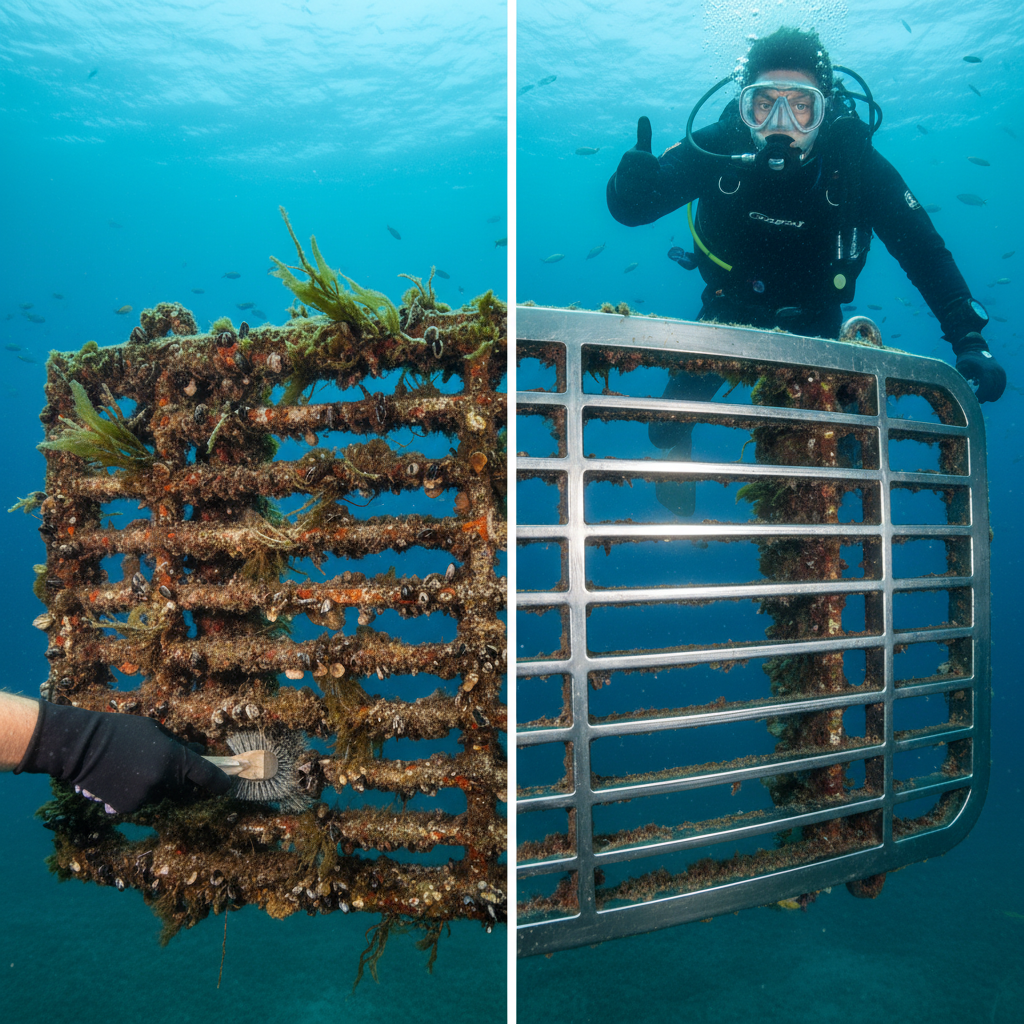
But wait—the real kicker is the ‘Ghost Drag.’ One of our clients at Safe Harbor Sunroad (just up the way from Pier 32) was convinced his turbos were failing. After a 30-minute underwater intake cleaning and hull scrub, his top-end speed jumped from 22 to 27 knots instantly. He saved a $6,000 mechanic’s diagnostic fee just by clearing the ‘biological brakes’ off his boat.
Ready to stop the bleed? Schedule your professional hull inspection today and get the photo proof your hull deserves.
Hardware vs. Hydrology: Why New Boats Fail Faster
The most dangerous assumption in the Pier 32 Marina is that a ‘new’ boat is a ‘clean’ boat. Modern high-performance hulls are designed with incredibly tight tolerances; even ‘micro-barnacle’ growth on the intake grates causes cavitation that starves your cooling system.
- Intake Turbulence: Fouled grates create turbulent water flow, making your vessel performance monitoring systems throw false codes.
- Weight Distribution: Saturated growth can add hundreds of pounds of ‘dead weight’ to your waterline.
- The ROI of Smooth: A professional cleaning pays for itself in exactly 2.4 trips to the fuel dock at current California diesel prices.
What most people miss is that according to the EPA’s vessel guidance, biofouling isn’t just a performance killer; it’s an environmental hazard that increases your carbon footprint significantly. By maintaining a clean hull, you aren’t just saving money—you’re protecting the very waters of San Diego Bay you enjoy.
The Pier 32 Micro-Climate: A Greenhouse for Growth
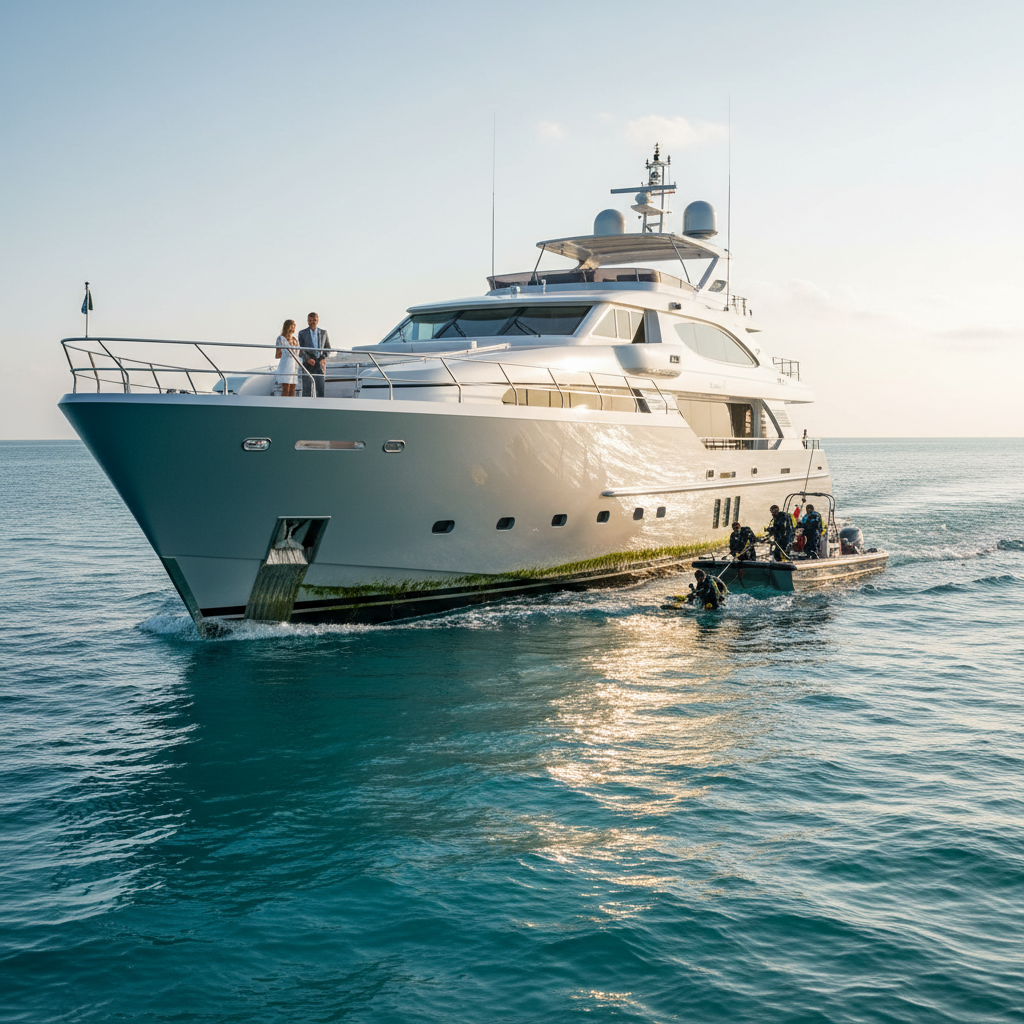
South San Diego Bay has higher average water temperatures and lower circulation than the mouth of the bay near Shelter Island. This creates a hyper-accelerated fouling environment where a boat can lose 10% of its speed in just three weeks of sitting idle.
The real kicker? Ultrasonic anti-fouling systems, while great on paper, often fail to protect the ‘shadow zones’ like your thruster tunnels and intake grates. This is where underwater intake cleaning becomes mandatory. We’ve seen $1M cruisers at Chula Vista Marina struggling to get on plane because their ‘maintenance-free’ system didn’t account for the localized biology of the South Bay.
Need a second opinion on your performance drop? Call 360 Hull Diving at (619) 555-0199 for a flat-rate consult that actually looks under the boat.
Stop Paying the ‘Speed Trap’ Tax
The contrarian truth in the marine industry is that your electronics are usually fine, but your biology is a mess. Spending $5,000 on a new transducer to fix a GPS calibration error is like buying a faster treadmill because your shoes are tied together.
- Step 1: Verify SOG vs STW. If there’s a 2-knot gap, it’s growth, not gear.
- Step 2: Check the intakes. Cavitation starts at the grates.
- Step 3: Get before-and-after photo proof. If your diver doesn’t show you the grates, they didn’t clean them.
At 360 Hull Diving, we provide the transparency that Pier 32 Marina boat speed enthusiasts demand. We don’t just scrub; we document. You’ll see exactly what was slowing you down before we even leave the dock.
FAQs About Pier 32 Marina Boat Speed
Why does my GPS show a different speed than my dashboard?
Your GPS measures Speed Over Ground (SOG) via satellite, while your dashboard likely uses a paddlewheel for Speed Through Water (STW). When biofouling builds up on the sensor or the hull, the STW drops due to drag, creating a GPS calibration error that makes your electronics look faulty when the hull is actually dirty.
How often do I need underwater intake cleaning in South San Diego Bay?
Due to the warmer, shallower water near Pier 32 Marina, we recommend a professional cleaning every 3-4 weeks. Waiting longer allows ‘hard growth’ to calcify on your intake grates, which can lead to engine overheating and significant marine biofouling fuel penalty costs that far exceed the price of a dive.
Can a dirty hull really cost me $15,000?
Yes. When you factor in a 15-20% increase in fuel burn, accelerated zinc depletion, and the long-term engine strain of running at higher RPMs to maintain cruise speed, the math adds up quickly. For mid-sized yachts in the San Diego area, the ‘Ghost Drag’ tax is the single largest avoidable expense in boat ownership.
Is a brand new boat immune to these speed issues?
Actually, new boats are often more sensitive. Modern hull designs rely on smooth water flow to reach rated speeds. Even a ‘micro-layer’ of slime in the first month at Pier 32 Marina can disrupt this flow, causing your vessel performance monitoring to show decreased efficiency before you’ve even finished your first 50-hour service.
Don’t let biological ‘ghost drag’ turn your weekend getaway into a fuel-chugging nightmare. The difference between a frustrating cruise and a record-breaking run is often just 30 minutes of expert attention. Contact 360 Hull Diving today for a guaranteed performance boost you can see in our photo reports.