
📋 Table of Contents
Maintaining precise Clipper Yacht Harbor depth sounder calibration is a non-negotiable requirement for vessel owners navigating the complex tidal shifts of Richardson Bay. When marine growth accumulates on your transducer, it doesn’t just look unsightly; it fundamentally alters the ultrasonic signal processing required for safe pilotage in Sausalito’s narrow channels.
Key Takeaways for Bay Area Mariners:
- Biofouling on transducer faces is a leading cause of signal attenuation and depth errors.
- The ‘Ghost Bottom’ effect can lead to grounding incidents in shallow marina fairways.
- Professional, hand-cleaned maintenance is superior to harsh scrubbing for sensitive electronics.
- Regular inspections are essential due to Sausalito’s high nutrient levels and seasonal algae blooms.
The Technical Reality of Clipper Yacht Harbor Depth Sounder Calibration
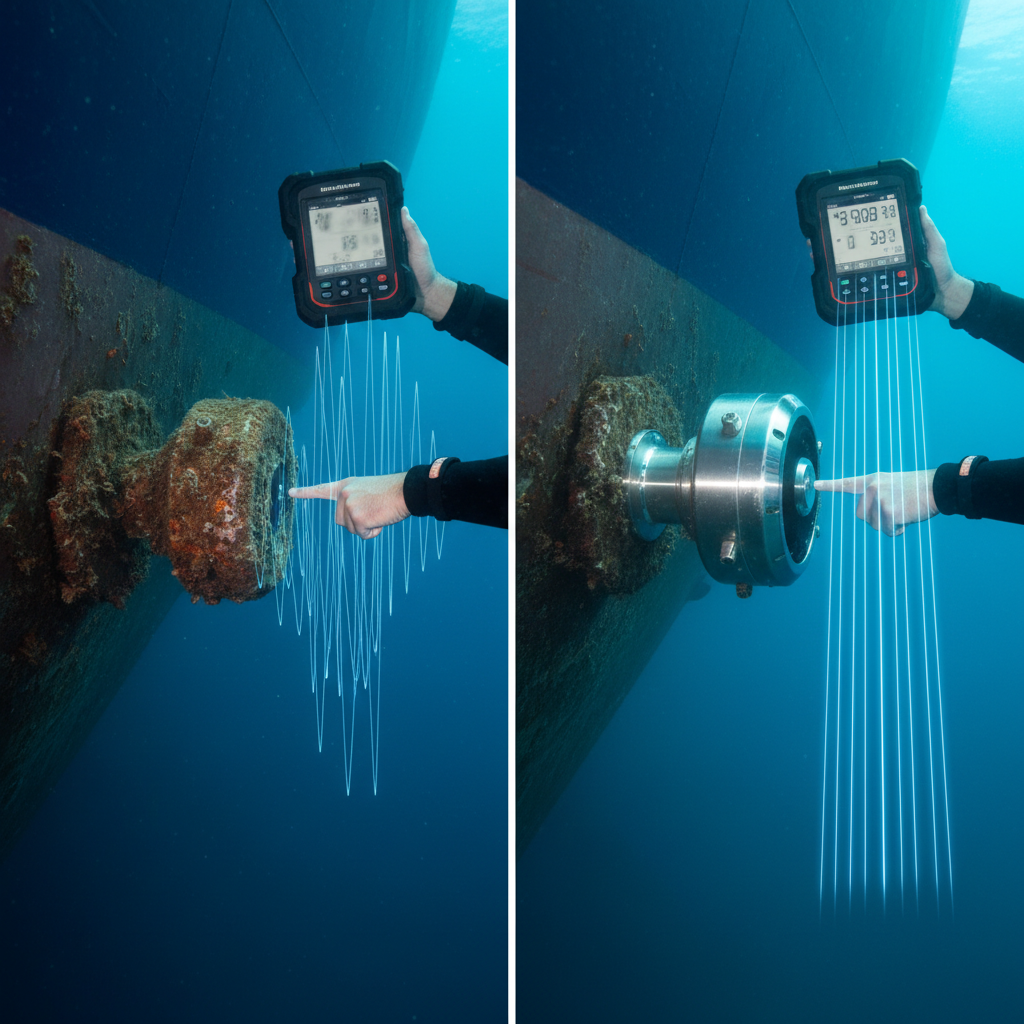
As of 2024, marine electronics have become increasingly sophisticated, yet they remain vulnerable to the biological realities of the San Francisco Bay. The accuracy of your sonar depends entirely on the clear transmission of sound waves through the water column. When barnacles or tube worms attach to the transducer face, they create an acoustic barrier that disrupts the signal timing.
Furthermore, the specific salinity levels in Sausalito accelerate the calcification of marine organisms. This biological interference often results in a phenomenon known as “signal drift,” where your display shows a depth that is significantly different from the actual seabed. Without regular Clipper Yacht Harbor depth sounder calibration and physical cleaning, your margin of safety evaporates.
How Biofouling Disrupts Ultrasonic Signals
Transducers work by converting electrical energy into high-frequency sound. According to the National Oceanic and Atmospheric Administration (NOAA), sound travels differently based on medium density. Marine growth introduces air pockets and hard calcium structures that refract these waves, leading to:
- Signal Attenuation: Weakened pulses that fail to return to the sensor in deep water.
- False Echoes: The sensor detects the growth on its own face rather than the sea floor.
- Increased Noise: Turbulent water flow around barnacles creates digital interference.
The ‘Ghost Bottom’ Effect and Navigational Hazards in Sausalito
One of the most dangerous consequences of neglected Clipper Yacht Harbor depth sounder calibration is the ‘Ghost Bottom’ effect. This occurs when a layer of micro-fouling or dense algae creates a secondary reflective surface. Your electronics may lock onto this layer, reporting 10 feet of water when you actually have less than five.
Consequently, this creates a high-stakes environment during low tide transitions at marinas like Clipper Yacht Harbor or nearby Schoonmaker Point. A discrepancy of just a few inches can be the difference between a smooth exit and a costly grounding incident that damages your keel or running gear.
| Fouling Level | Impact on Accuracy | Recommended Action |
|---|---|---|
| Micro-slime layer | 1-3% Signal Loss | Monthly soft-cloth wipe | Algae/Grass buildup | 5-10% Signal Loss | Professional diver inspection | Barnacle/Tube worms | 25% + Signal Loss | Immediate hand-cleaning & recalibration |
Ready to ensure your sensors are reading true? Schedule a professional hull inspection with 360 Hull Diving to receive before-and-after photo proof of your transducer’s condition.
Why Precision Transducer Face Cleaning Matters
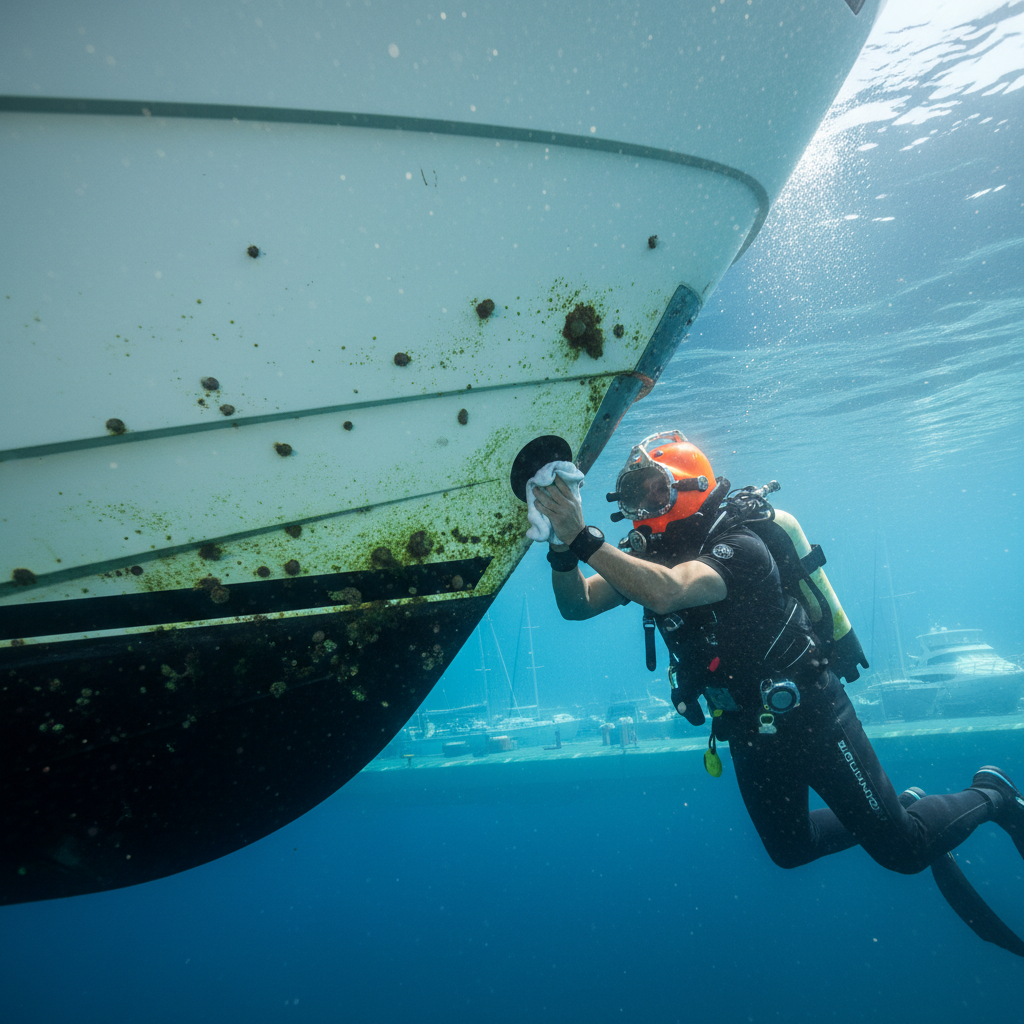
While many boat owners attempt DIY cleaning, transducer face cleaning requires a delicate touch. Modern transducers are often housed in plastic or specialized compounds that can be easily scratched by wire brushes or harsh scrapers. These microscopic scratches then become the perfect anchor points for new larvae, creating a cycle of rapid fouling.
Our team at 360 Hull Diving utilizes specialized non-abrasive techniques specifically designed for Sausalito marine electronics maintenance. By removing growth without damaging the sensor’s acoustic window, we ensure that your digital calibration remains stable for longer periods. This precision is vital for vessels utilizing advanced 3D mapping or Chirp technology.
The Link Between Biofouling and Fuel Efficiency
While the primary concern is depth sounder accuracy, the drag created by a fouled transducer also impacts your vessel’s performance. Increased drag forces the engine to work harder to maintain cruising speeds, leading to higher fuel consumption. According to studies by the Environmental Protection Agency (EPA), even minor hull fouling can increase fuel costs by up to 10%.
Strategic maintenance includes:
- Regular monthly cleanings during peak growth seasons (April-October).
- Verification of depth sounder calibration after every professional dive.
- Application of specialized transducer anti-fouling paints where appropriate.
Seasonal Algae Blooms and Sonar Accuracy at Clipper Yacht Harbor
The environmental conditions at Clipper Yacht Harbor are unique due to the confluence of fresh water from the Delta and salt water from the Golden Gate. During seasonal algae blooms, the water density changes, and the suspended particulates can confuse sensitive sonar systems. This makes Clipper Yacht Harbor depth sounder calibration a moving target that requires physical verification.
Moreover, the nutrient-rich runoff in Sausalito promotes rapid crustacean growth. If your boat sits idle for more than two weeks, a biofilm begins to form. This film is the foundation for barnacle attachment, which can completely obscure a transducer face in less than a month during the summer season.
Don’t risk your vessel’s safety on a guess. Learn more about our comprehensive zinc and hull protection services to keep your underwater assets in peak condition.
Maintenance Checklist: Bridging Digital and Physical Care
To maintain peak depth sounder accuracy, mariners should follow a holistic maintenance schedule. It is not enough to simply press the ‘calibrate’ button on your Raymarine or Garmin display; you must ensure the physical hardware is capable of sending a clear signal.
- Visual Verification: Request photo proof of the transducer face during every dive service.
- Zero-Point Calibration: Periodically check your digital depth against a manual lead line in a known depth area.
- Interference Check: Ensure that other onboard electronics aren’t creating electrical noise that mimics the appearance of marine growth.
- Professional Cleaning: Use a certified dive team that understands the sensitivity of Sausalito marine electronics maintenance.
Conclusion: The ROI of Professional Hull Maintenance
Investing in regular Clipper Yacht Harbor depth sounder calibration and professional cleaning is an investment in your vessel’s longevity and your passengers’ safety. In the tight fairways of Sausalito, a functioning depth sounder is your most valuable tool for avoiding the hazards of the Bay.
By choosing a service that provides before-and-after photo proof, you gain the transparency needed to manage your vessel with confidence. 360 Hull Diving is committed to providing Bay Area boat owners with the technical expertise required for modern marine maintenance. Protect your electronics, improve your fuel efficiency, and ensure your next voyage starts with a clear view of the bottom.
Is your depth sounder giving you questionable readings? Don’t wait for a grounding incident to take action. Contact 360 Hull Diving today for a precision transducer cleaning and hull inspection in Sausalito, Tiburon, or Belvedere.
Frequently Asked Questions
How often should I clean my transducer face in Sausalito?
In the high-growth environment of Clipper Yacht Harbor, we recommend a professional cleaning every 3-4 weeks. This prevents the transition from soft biofilm to hard calcified growth, ensuring your depth sounder accuracy remains within manufacturer specifications throughout the year.
Can I use a regular hull brush on my depth sounder transducer?
We strongly advise against using standard hull brushes on transducers. The bristles can cause microscopic abrasions on the sensitive acoustic window. Professional transducer face cleaning should be done by hand using soft cloths or specialized non-marring tools to preserve the integrity of the sensor.
Why does my depth sounder show ‘lost bottom’ at high speeds?
This is often caused by turbulence created by barnacles attached to or near the transducer. As the boat moves faster, the uneven surface of the marine growth creates air bubbles (cavitation), which block the sonar signal. Proper underwater hull cleaning resolves this issue immediately.
Does bottom paint affect depth sounder calibration?
Standard copper-based bottom paint can interfere with sonar signals if applied directly to the transducer face. It is crucial to use specialized, signal-transparent transducer paint. If your Clipper Yacht Harbor depth sounder calibration is off, check if the sensor was accidentally painted during your last haul-out.