
📋 Table of Contents
For boaters docked at the Petaluma Marina or cruising the North Bay, Petaluma River silt scouring is an invisible threat that can compromise your vessel’s structural integrity. Unlike the visible barnacles found in Sausalito or Richmond, the fine particulate matter in the Petaluma River acts as a continuous abrasive, slowly sandblasting your underwater fittings. As of 2024, increased storm runoff has raised sediment density to levels that demand immediate attention from serious boat owners.
Key Takeaways for North Bay Owners
- The Sandblasting Effect: High-velocity river currents turn suspended solids into an abrasive force that thins bronze and plastic thru-hulls.
- Internal Risks: Silt ingestion causes premature wear on engine impellers and clogs HVAC heat exchangers.
- Strategic Maintenance: Monthly underwater inspections with photo proof are essential for identifying thru-hull abrasion before failure.
- Dredging Impact: Local dredging schedules can temporarily increase silt suspension, requiring more frequent strainer cleaning.
Understanding the Mechanics of Petaluma River Silt Scouring
The Petaluma River is unique among Bay Area waterways due to its high concentration of suspended silts and clays. When these particles move against your boat’s hull at several knots, they create a phenomenon known as Petaluma River silt scouring. This process is essentially mechanical erosion that targets the leading edges of your underwater hardware.
Furthermore, the abrasive nature of this sediment is exacerbated during the outgoing tide when water velocity peaks. According to the U.S. Environmental Protection Agency, sediment transport in the San Francisco Bay estuary is a primary factor in underwater material degradation. For a vessel moored in Petaluma, this means your seacocks and transducers are under constant bombardment.
- Thinning Metal: Bronze thru-hulls can lose significant wall thickness over 3-5 years in high-silt environments.
- Coating Removal: Abrasive sediment strips anti-fouling paint faster than saltwater alone, exposing the substrate.
- Seal Failure: Silt particles lodge in seacock ball valves, causing them to seize or leak.
The Hidden Dangers of Thru-Hull Abrasion
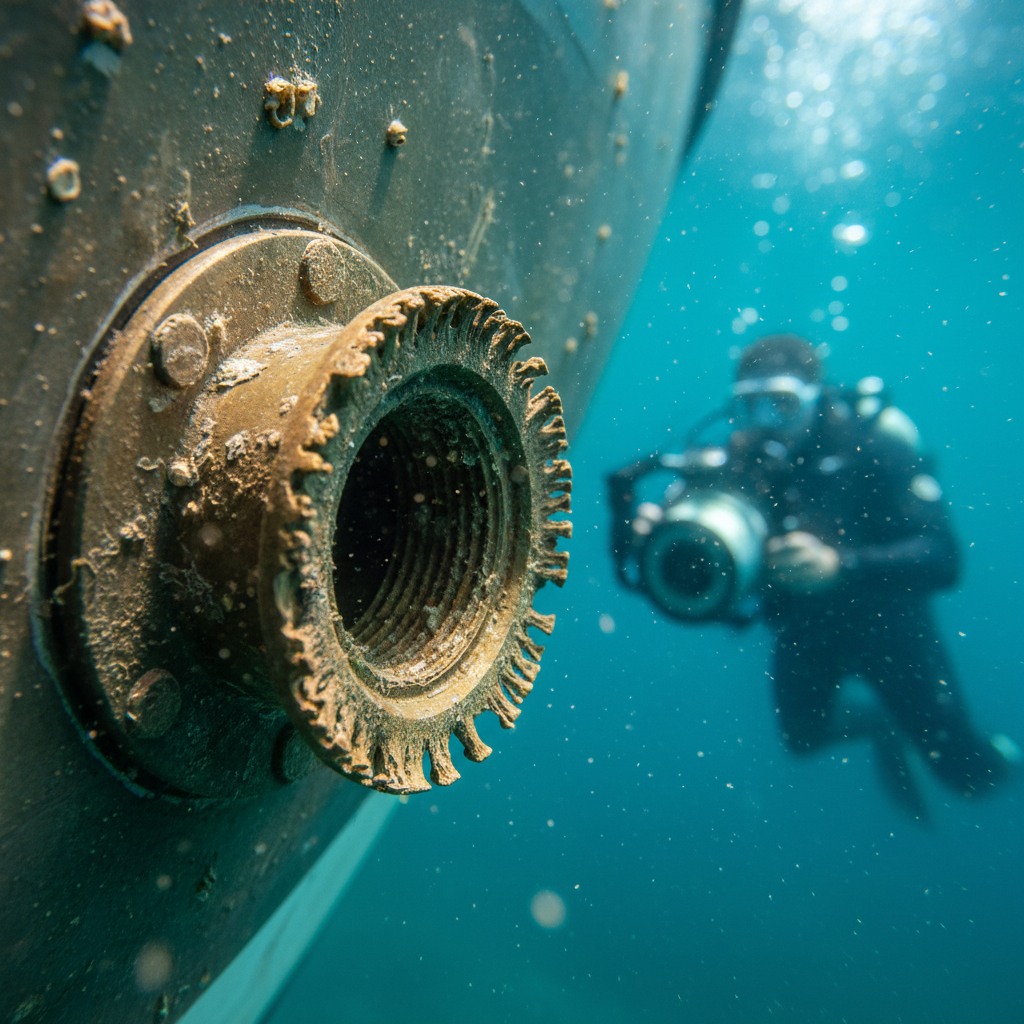
While most owners focus on biofouling, thru-hull abrasion is often the more expensive problem to solve. Because the damage happens at a microscopic level over thousands of hours, it is rarely noticed until a fitting fails or a leak develops. This is why 360 Hull Diving emphasizes the importance of high-resolution photo documentation during every service.
Specifically, the edges of raw water intakes are particularly vulnerable. As water is sucked into the cooling system, it carries concentrated sediment that scours the internal threads and valves. If you notice a change in the color or texture of your bronze fittings, you are likely witnessing the early stages of river sediment boat damage.
| Component | Silt Impact Level | Primary Failure Mode |
|---|---|---|
| Bronze Thru-Hulls | High | Wall thinning and thread erosion |
| Engine Impellers | Extreme | Blade pitting and loss of prime | Medium | Silt accumulation and overheating |
| Seacock Valves | High | Seizing due to sediment in seats |
Transitioning from basic cleaning to a proactive defense strategy is vital. If you haven’t had your underwater hardware inspected this season, schedule a professional Silt-Defense Audit to ensure your vessel remains watertight.
How River Sediment Boat Damage Affects Internal Systems
The damage isn’t limited to the exterior of your hull. River sediment boat damage extends deep into your engine room and climate control systems. When silt is ingested through the intakes, it acts like liquid sandpaper on the soft rubber of your raw water impellers.
Moreover, the fine mud found in the North Bay can settle in the low spots of your heat exchangers. Over time, this creates a hardened layer of “river brick” that reduces cooling efficiency and leads to engine overheating. This is a common issue for boats that spend significant time idling in shallow berths at low tide.
Preventative Steps for Internal Protection
- Upgrade Strainers: Consider high-capacity internal strainers that are easier to flush frequently.
- Freshwater Flushing: Install a T-valve to flush your system with fresh water after every outing in the Petaluma River.
- Impeller Replacement: Shorten your service interval for impellers to every 100 hours or annually, whichever comes first.
The Role of Petaluma River Dredging in Hull Health
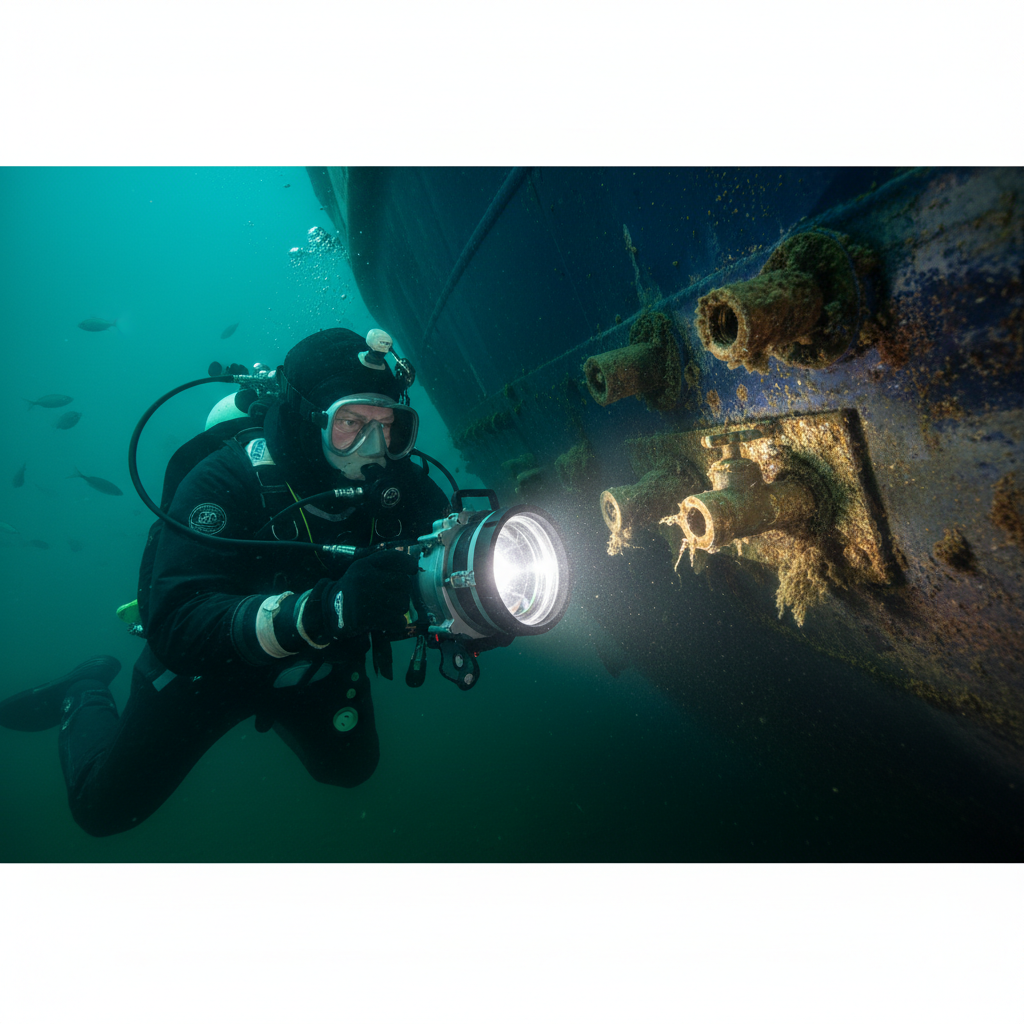
Local infrastructure projects, such as Petaluma River dredging, are necessary for navigation but present temporary risks to boaters. When the Army Corps of Engineers begins dredging operations, the concentration of suspended solids in the water column spikes dramatically. This increased turbidity accelerates the rate of Petaluma River silt scouring for nearby vessels.
During these periods, we recommend doubling your cleaning and inspection frequency. Our dive teams at 360 Hull Diving monitor local notices from the U.S. Army Corps of Engineers San Francisco District to advise our clients in Petaluma and Napa on when to take extra precautions. Staying informed about these local shifts is what separates a well-maintained yacht from one facing emergency repairs.
Need a professional eye on your boat during the next dredging cycle? Explore our underwater inspection services to see how we track sediment wear over time.
Strategic Solutions for Underwater Hull Maintenance in Petaluma
Effective underwater hull maintenance in Petaluma requires a different approach than in the clearer waters of Belvedere or Tiburon. You need a dive team that understands the specific chemistry and geology of the North Bay. At 360 Hull Diving, we provide before-and-after photo proof because we know that transparency is the only way to prove your thru-hulls are safe.
One advanced strategy is the application of specialized foul-release coatings on thru-hulls. These coatings are often more resilient to the abrasive nature of silt than traditional copper-based paints. However, even the best coatings require regular monitoring to ensure they haven’t been breached by aggressive scouring.
- Visual Baselines: We establish a photo baseline of every thru-hull to track metal loss.
- Zinc Selection: Silt can interfere with sacrificial anodes; we ensure your zincs are making clean contact.
- Valve Exercise: Our divers manually exercise your seacocks during every clean to prevent silt-related seizing.
Is Your Vessel Protected from Silt Scouring?
The reality for North Bay mariners is that the river is constantly trying to reclaim your boat’s hardware. Ignoring the cumulative effects of Petaluma River silt scouring can lead to catastrophic failures, often at the worst possible time. By investing in regular, professional maintenance, you are protecting your investment and ensuring your safety on the water.
As a locally rooted business, 360 Hull Diving is committed to providing the Bay Area’s most trusted, insured underwater services. Whether you are at the Petaluma Marina, Oyster Point, or the Berkeley Marina, our team brings the expertise needed to combat the unique challenges of our local waters.
Ready to protect your boat from abrasive sediment? Contact 360 Hull Diving today for a free estimate and see the difference that photo-verified maintenance makes.
Frequently Asked Questions
How often should I have my hull cleaned in the Petaluma River?
Due to the high sediment load and Petaluma River silt scouring risks, we recommend a monthly cleaning schedule. This allows our divers to not only remove biofouling but also clear silt from intakes and monitor thru-hulls for signs of abrasive wear before they become critical issues.
Can silt scouring actually cause my boat to sink?
In extreme cases, yes. If thru-hull abrasion thins the metal of a fitting until it cracks or if a seacock becomes seized in the open position and a hose fails, your vessel’s watertight integrity is compromised. Regular inspections are the only way to mitigate this risk effectively.
Do I need different bottom paint for the Petaluma River?
While standard anti-fouling works, boats in high-silt areas benefit from hard-epoxy paints or specialized foul-release coatings. These are more resistant to the sandblasting effect of river sediment boat damage compared to softer, ablative paints that may wear away prematurely in the current.
What should I do if my engine is running hot in the river?
First, check your raw water strainers for silt accumulation. If they are clear, the issue may be silt clogging the heat exchanger or a worn impeller due to abrasive sediment. We recommend a professional underwater intake inspection to ensure the external grates are not obstructed by river mud.