
📋 Table of Contents
Effective antifouling paint maintenance is no longer just a cosmetic choice; it is a critical financial strategy for sophisticated vessel owners. As shipyard labor costs at facilities across the San Francisco Bay continue to climb, proactive owners at the Grand Marina in Alameda are pivoting toward ‘underwater grooming’ to protect their high-capital investments. By prioritizing gentle care over aggressive scraping, you can effectively double the lifespan of your bottom paint.
Key Takeaways for Bay Area Owners:
- Soft-scrubbing preserves the biocide depletion rate of ablative paints.
- Regular maintenance can extend haul-out intervals from 24 months to 48+ months.
- Smooth hulls reduce hydrodynamic drag, cutting fuel consumption by up to 15%.
- Professional divers provide photo proof to ensure transparency and coating integrity.
The Economic Impact of Antifouling Paint Maintenance
As of 2024, the cost of a full haul-out, prep, and repaint for a 40-foot vessel in Northern California can easily exceed $5,000. Consequently, many owners are looking for ways to defer these massive capital expenditures without compromising vessel performance. Strategic antifouling paint maintenance focuses on preserving the microns of paint you already paid for, rather than allowing heavy growth to take hold.
Furthermore, the transition from traditional biocidal coatings to modern foul-release systems requires a more nuanced touch. According to research on marine coating regulations, maintaining the integrity of the paint surface is essential for both environmental compliance and hull speed. When you allow barnacles to mature, their calcium bases (husks) cut deep into the coating, necessitating a full sand-down during your next haul-out.
- Asset Preservation: Keeping the paint smooth prevents the ‘pitting’ that leads to osmosis and gelcoat damage.
- Cost Deferral: Monthly soft-scrubs cost a fraction of a shipyard bill but keep the boat in ‘ready-to-race’ condition.
- Resale Value: A documented history of professional underwater care is a major selling point in the local brokerage market.
Predictive Maintenance and Underwater Inspections
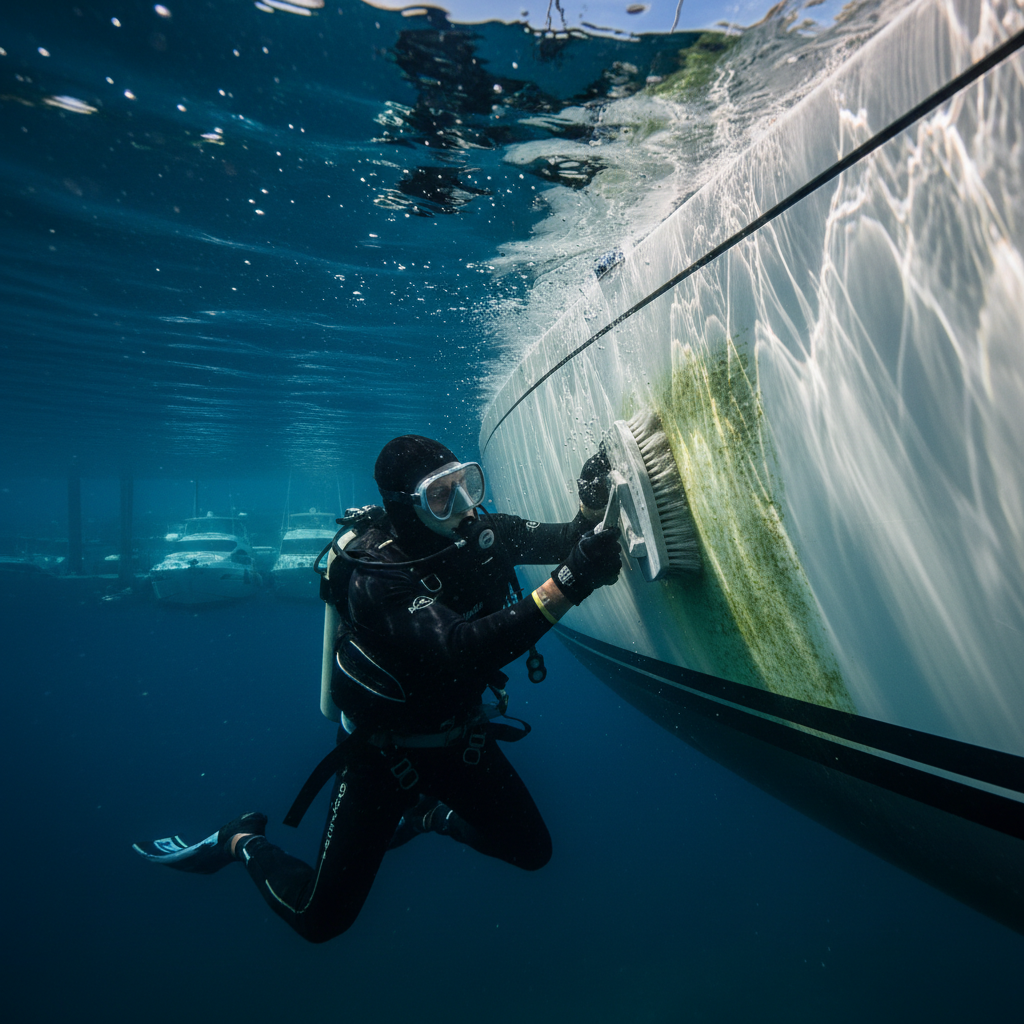
Modern underwater hull grooming utilizes predictive techniques to identify when a cleaning is necessary before biofouling becomes destructive. Instead of waiting for a loss in boat speed, we use high-definition photo proof to monitor the biocide depletion rate. This allows for a ‘just-in-time’ service model that optimizes the bottom paint lifespan.
How Soft-Scrub Hull Cleaning Preserves Your Coating
The distinction between ‘scrubbing’ and ‘grooming’ is vital for any recreational boat owner. Traditional aggressive cleaning methods use stiff brushes that strip away layers of expensive ablative paint. In contrast, soft-scrub hull cleaning utilizes specialized soft-bristle brushes or microfiber pads designed to remove slime without depleting the paint’s active biocide layer.
Research from Energy.gov indicates that even a thin layer of biofilm (slime) can increase fuel consumption significantly. By removing this layer gently and frequently, you maintain maximum hydrodynamic efficiency. This is particularly relevant for owners at the Berkeley Marina or Richmond Yacht Club, where localized nutrient levels can accelerate algae growth.
- Biocide Retention: Soft tools ensure the chemical ‘leach rate’ remains consistent and effective.
- Surface Smoothness: Preventing the attachment of hard growth (barnacles) keeps the hull surface friction-free.
- Coating Uniformity: Professional divers ensure even wear across the entire waterline and keel.
Ready to see the difference for yourself? Schedule a professional inspection today and get before-and-after photo proof of your hull’s condition.
The Financial ROI: Monthly Grooming vs. Emergency Haul-Outs
To understand the true value of antifouling paint maintenance, one must look at the long-term data. A Series B startup executive or a high-growth business leader understands that operational efficiency is the key to scaling ROI. The same logic applies to your vessel’s maintenance schedule.
| Maintenance Strategy | Annual Cost (Est.) | Haul-Out Interval | 4-Year Total Cost |
|---|---|---|---|
| Neglect / Reactive Cleaning | $1,200 (Fuel + Heavy Scrub) | 2 Years | $14,800 |
| Proactive Soft-Scrubbing | $1,800 (Monthly Service) | 4 Years | $12,200 |
By investing in regular soft-scrub hull cleaning, you are not just spending money on a service; you are buying time. For boat owners in Sausalito or Alameda, this strategy saves an average of 15-20% over a four-year cycle when accounting for fuel savings and deferred shipyard labor.
Combating Rising Ocean Temperatures
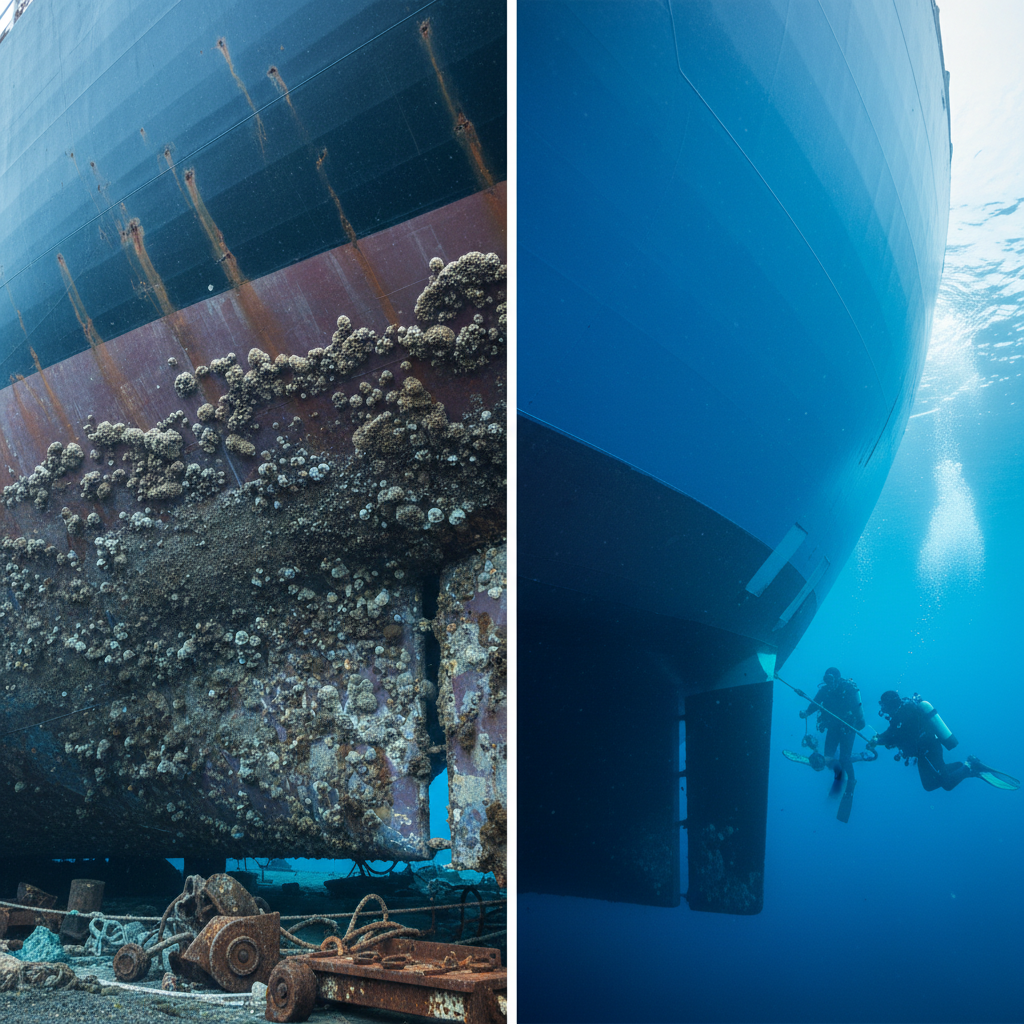
It is a documented fact that rising water temperatures in the San Francisco Bay have led to accelerated barnacle growth cycles. What used to be a 3-week growth cycle is now often 2 weeks during the summer months. Consistent antifouling paint maintenance is the only way to stay ahead of these biological shifts without resorting to toxic, high-copper solutions that face increasing regulatory scrutiny.
Maximizing Bottom Paint Lifespan in the Bay Area
Our local waters present unique challenges, from the high silt levels near the Port of Oakland to the heavy currents of the Golden Gate. To maximize your bottom paint lifespan, your maintenance plan must be tailored to your specific marina. For instance, boats at the South Beach Harbor often face different fouling pressures than those at the Marina Village Yacht Harbor.
Strategic grooming ensures that the ‘foul-release’ properties of modern coatings—especially those from brands like high-end marine suppliers—are not compromised by physical abrasion. When a diver uses a metal scraper on a soft ablative paint, they are effectively throwing your money into the water. Our team focuses on ‘grooming’—a preventative approach that keeps the hull slick and the paint intact.
- Zinc & Corrosion Check: Every cleaning includes an inspection of your sacrificial anodes to prevent electrolysis.
- Propeller Polishing: Maintaining a clean running gear is essential for achieving the vessel’s rated RPM and engine health.
- Condition Reports: Receive a digital log of your hull’s health after every visit for your maintenance records.
If you are looking for a more advanced approach to vessel management, explore our guide on zinc and corrosion protection to see how we provide 360-degree care for your boat.
Eco-Friendly Hull Maintenance and Regulatory Compliance
The maritime industry is facing a significant shift toward ‘green’ operations. Regulatory bodies are increasingly focused on copper runoff in marinas like those in San Francisco and Alameda. Antifouling paint maintenance through regular soft-scrubbing is the most eco-friendly way to manage your hull. By preventing the need for aggressive cleaning, we reduce the amount of biocide released into the water column.
Furthermore, keeping your hull clean prevents the migration of invasive species. According to the U.S. Fish and Wildlife Service, biofouling is a primary vector for non-native species. A well-maintained hull protects the delicate ecosystem of the San Francisco Bay while ensuring your vessel remains compliant with all local environmental standards.
Hydrodynamic Drag and Carbon Footprint
For the eco-conscious mariner, the link between a clean hull and reduced carbon emissions is clear. Less drag means less engine load, which translates directly to lower CO2 output. This ‘green’ ROI is a compelling reason for modern leaders to invest in professional hull cleaning guides and services.
Don’t let aggressive cleaning strip away your investment. Contact 360 Hull Diving for a customized maintenance plan that keeps your boat fast, efficient, and in the water longer.
FAQs: Advanced Antifouling Paint Maintenance