
📋 Table of Contents
Key Takeaways: A pre-season inspection is the most cost-effective way to ensure yacht race readiness and prevent long-term hull damage. By identifying biofouling and zinc depletion early, Richmond boaters avoid mid-season haul-outs and excessive fuel consumption.
As the winter rains subside and the Richmond Yacht Club (RYC) prepares for its legendary spring racing series, savvy mariners know that success begins below the waterline. A professional pre-season inspection is not merely a suggestion; it is a strategic requirement for anyone navigating the unique brackish waters of the Potrero Reach and the wider San Francisco Bay. While the winter months often see a dormancy in recreational usage, the underwater environment remains aggressively active, with silt and invasive species colonizing hulls at an alarming rate.
The Importance of a Pre-Season Inspection for Richmond Boaters
According to the Environmental Protection Agency (EPA), biofouling management is critical for both environmental protection and vessel efficiency. For members at the Richmond Yacht Club, the transition from winter to spring presents a narrow window of opportunity to address soft growth before it calcifies into hard shell, which is significantly more difficult and abrasive to remove. A proactive pre-season inspection identifies these issues before they compromise your bottom paint or running gear.
- Biofouling Prevention: Removing winter slime before it hardens into barnacles.
- Fuel Efficiency: Reducing drag to lower carbon footprints and fuel costs.
- Running Gear Safety: Ensuring propellers and shafts are free of debris from winter storms.
- Zinc Integrity: Confirming that sacrificial anodes have survived the heavy rainy season’s electrolysis.
Why Richmond Inner Harbor Conditions Demand Early Action
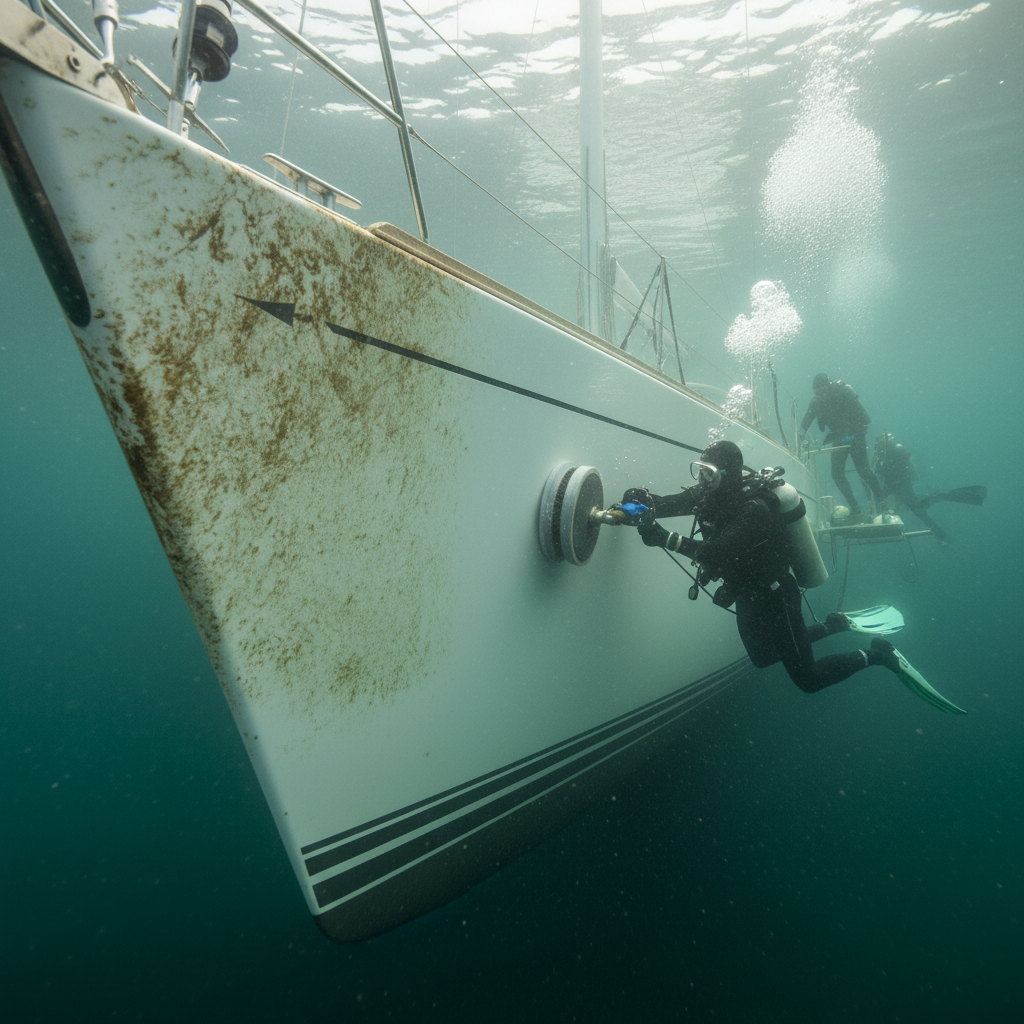
Furthermore, the specific geography of the Richmond Inner Harbor contributes to unique maintenance challenges. The mixture of freshwater runoff from the Delta and the saltwater of the Bay creates a nutrient-rich environment where biofouling thrives. Consequently, waiting until the first warm weekend in April to check your hull often results in finding a miniature reef that has already begun to degrade your vessel’s performance.
Strategic owners at Point San Pablo marine services locations understand that sediment from the Potrero Reach can settle in critical areas like intake valves and thruster tunnels. A comprehensive pre-season inspection ensures these pathways are clear, preventing engine overheating during your first cruise of the season. At 360 Hull Diving, we provide high-resolution before-and-after photo proof so you can see exactly what is happening under your boat without leaving the dock.
Maximizing Yacht Race Readiness for the Spring Series
For the competitive sailors at RYC, the difference between a podium finish and the middle of the fleet often comes down to hull friction. A pre-season inspection is the first step in achieving a ‘racing bottom’ that slices through the water with minimal resistance. As of 2024, the trend toward copper-free bottom paints means that regular professional cleaning is more important than ever to maintain the slick surface required for speed.
- Propeller Polishing: Removing microscopic roughness to eliminate cavitation and vibration.
- Thru-Hull Clearance: Ensuring speed transducers and depth sounders are providing accurate data.
- Paint Assessment: Evaluating if your anti-fouling coverage is sufficient for another season.
- Racing Edge: Gaining a psychological and mechanical advantage over competitors who neglected their hulls.
Consequently, many professional race teams in the Bay Area schedule their hull cleaning Richmond CA services in late February or early March. This timing allows for any necessary repairs to be handled before the local boatyards reach peak capacity. If you want to dominate the spring series, your preparation must start underwater.
Need to get race-ready? Schedule your pre-season inspection today and get the photo proof your hull is clean.
The Economic Impact: Saving Thousands in Preventative Care
While some owners view a pre-season inspection as an added expense, the ROI is undeniable. Data from Energy.gov suggests that even light slime can increase fuel consumption by up to 20%, while heavy barnacle growth can lead to a 40% increase. In an era of rising costs, maintaining a clean hull is the most effective way to protect your boating budget.
| Maintenance Item | Proactive Cost (Inspection) | Reactive Cost (Neglect) | Savings |
|---|---|---|---|
| Biofouling Removal | $150 – $300 | $2,500+ (Haul out) | $2,200+ |
| Zinc Replacement | $50 – $150 | $5,000+ (Prop/Shaft damage) | $4,850+ |
| Fuel Efficiency | Included | 20-40% higher fuel bills | Variable |
Protecting Against Galvanic Corrosion and Electrolysis
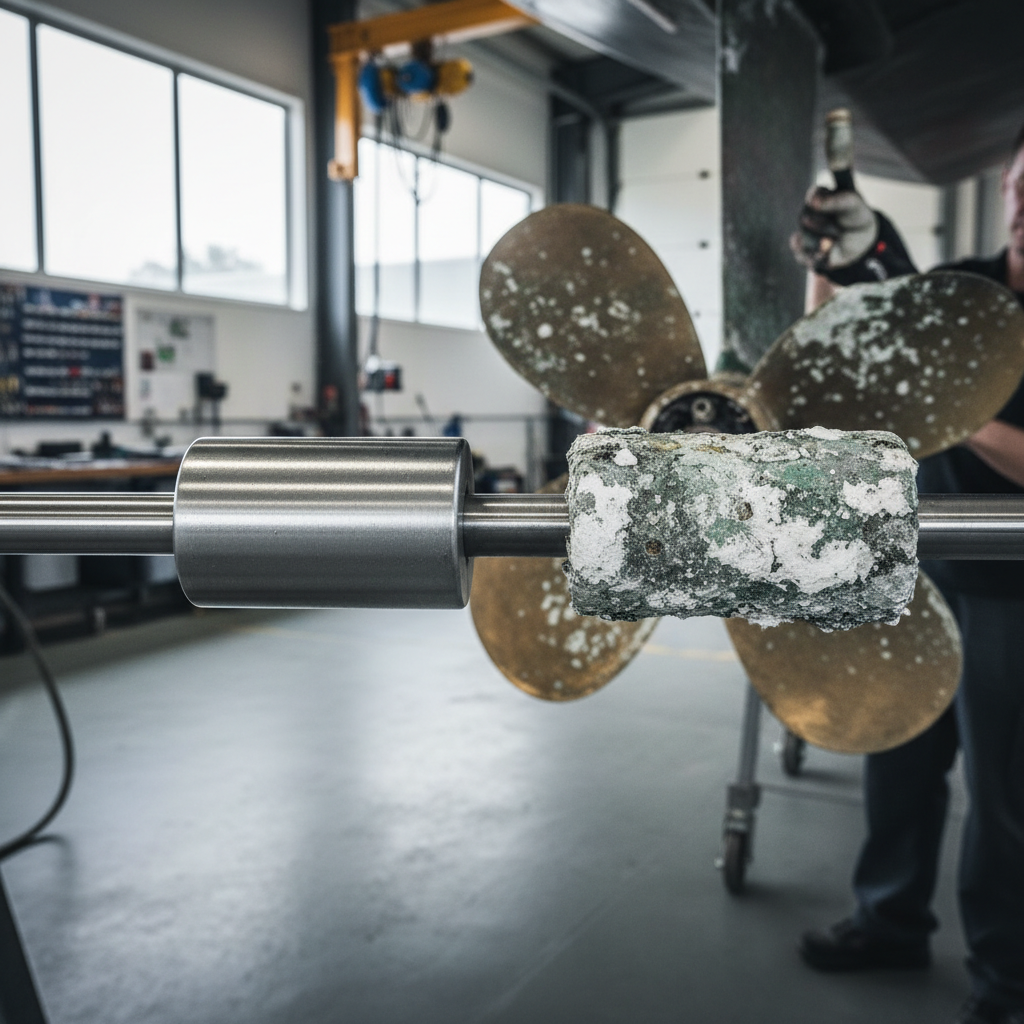
Additionally, the heavy rainy seasons in Northern California often lead to increased stray current in marinas as boats are plugged in for longer periods. This accelerates the depletion of your sacrificial anodes. A pre-season inspection specifically targets these zincs to ensure they are still providing protection to your expensive bronze and stainless steel components.
Transitioning to a regular maintenance schedule with zinc anode replacement is essential for long-term preservation. If your zincs disappear, the salt water will begin eating your propellers, shafts, and thru-hulls next. By catching this during a spring check, you avoid the catastrophic failure of running gear in the middle of a cruise to Angel Island or Tiburon.
Environmental Stewardship in the Potrero Reach
As residents of the Bay Area, we have a collective responsibility to protect our local ecosystems. The pre-season inspection allows for the identification and removal of invasive species before they can reproduce and spread throughout the Richmond Inner Harbor. Using eco-friendly, non-toxic maintenance techniques is a hallmark of the sophisticated Richmond Yacht Club member.
- Invasive Species Control: Preventing the spread of non-native bryozoans and tunicates.
- Paint Preservation: Gentle cleaning techniques that extend the life of your bottom paint.
- Water Quality: Reducing the need for harsh chemicals by maintaining a clean surface year-round.
Moreover, the Marine Services Association emphasizes that regular in-water cleaning, when done by insured professionals like 360 Hull Diving, is significantly better for the environment than allowing a hull to become so fouled that it requires heavy scraping or chemical stripping at a yard. We pride ourselves on being the Bay Area’s trusted, insured dive team, ensuring your boat stays compliant with local environmental regulations.
Smart Scheduling: Beating the April Rush
Finally, the most successful boat owners in Richmond are those who plan ahead. By booking your pre-season inspection in February or early March, you avoid the seasonal bottleneck that occurs every April. This ensures your boat is ready the moment the weather clears, rather than sitting on a three-week waiting list while your friends are out on the water.
At 360 Hull Diving, we specialize in serving the Richmond Yacht Club and surrounding marinas with transparency and reliability. Our detailed reports give you the peace of mind that your vessel is in top condition, or provide the early warning you need to schedule a haul-out before the summer season begins.
Conclusion: Your Roadmap to a Stress-Free Season
In conclusion, a pre-season inspection is the foundation of responsible and rewarding boat ownership. Whether you are chasing trophies in the spring series or planning quiet sunset cruises past Point San Pablo, the condition of your hull dictates your experience. Don’t let winter’s hidden growth slow you down or drain your wallet.
Ready to ensure your vessel is in peak condition? Contact 360 Hull Diving today for a professional pre-season inspection and start your spring season with confidence. Call us at our Richmond service desk for a free estimate!
Frequently Asked Questions
Why is a pre-season inspection better than waiting for summer?
A pre-season inspection catches winter growth while it is still soft slime. If you wait until summer, this growth often calcifies into hard shells (barnacles), which are much harder to remove and can permanently damage your bottom paint, leading to higher repair costs and decreased performance.
How does the Richmond Inner Harbor affect my boat’s hull differently?
The Richmond Inner Harbor and Potrero Reach have high levels of sediment and varying salinity due to Delta runoff. This creates a high-fouling environment where silt can clog intakes and specific invasive species thrive. A localized pre-season inspection is essential to address these specific Richmond-area challenges.
Will a spring hull inspection help my racing performance at RYC?
Absolutely. For Richmond Yacht Club racers, a clean hull is the most basic requirement for speed. An inspection ensures your racing bottom is smooth, your propeller is polished, and your transducers are clean, giving you the data and the drag-reduction needed to compete effectively in the spring series.
How often should I replace my zincs during the spring check?
During your pre-season inspection, we check the percentage of zinc remaining. If they are more than 50% depleted, we recommend immediate replacement. Given the high electrolysis levels in many Bay Area marinas after a wet winter, checking these early prevents expensive galvanic corrosion on your running gear.