
📋 Table of Contents
Optimizing hull cleaning fuel efficiency has become the single most important strategy for Bay Area boat owners facing the projected fuel price surges of 2026. As vessel owners at the Sausalito Yacht Harbor or Richmond Marina know, the San Francisco Bay is a high-nutrient environment where bio-growth never sleeps.
Furthermore, recent shifts in water temperatures due to El Niño cycles have accelerated the metabolic rates of local barnacle species. This means that even a boat sitting idle for two weeks can accumulate enough slime to significantly impact its hydrodynamic profile. Understanding the financial impact of this growth is no longer optional for the savvy mariner.
The Real Cost of Marine Bio-Fouling on Performance
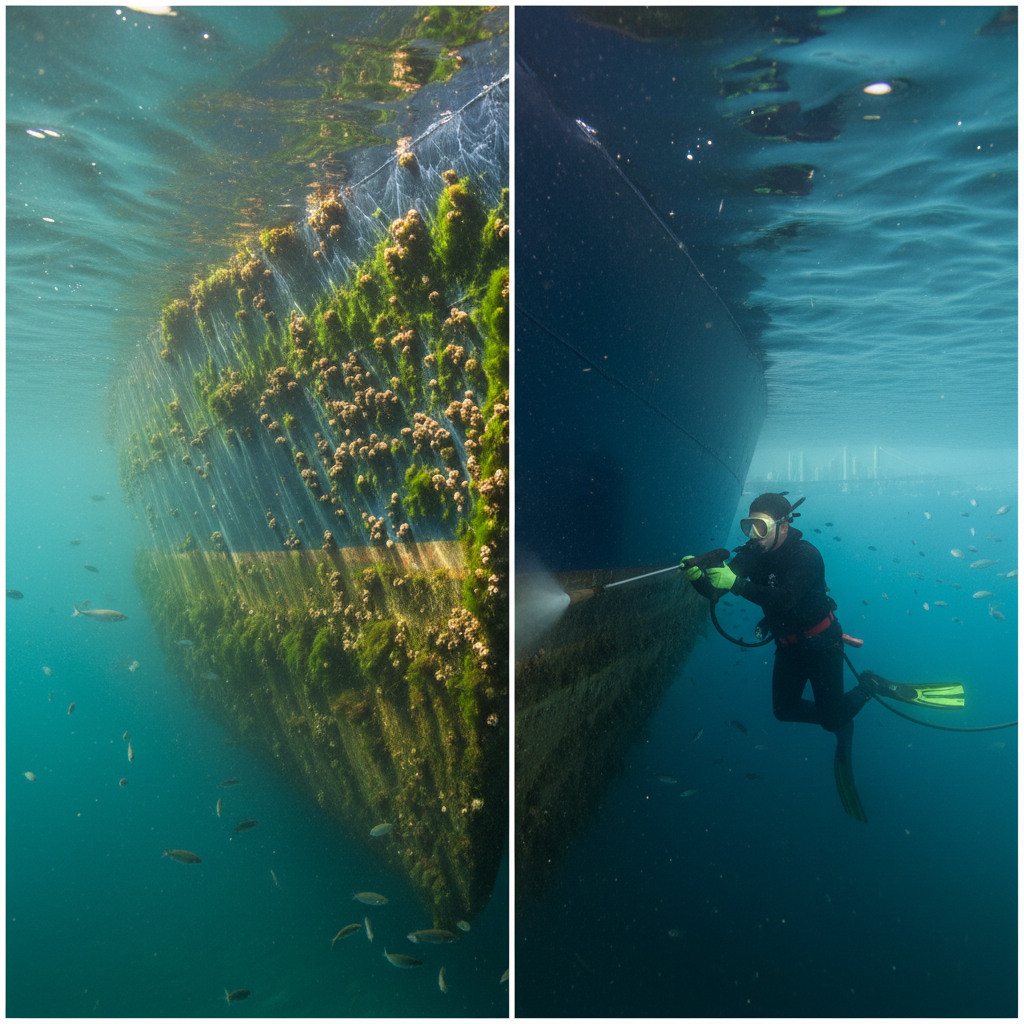
Marine bio-fouling is not just an aesthetic issue; it is a direct tax on your vessel’s propulsion system. When a hull is covered in even a thin layer of biofilm, the friction between the water and the hull increases exponentially, forcing your engines to work harder to maintain the same speed.
- Slime Layer Impact: A mere 0.5mm layer of slime can increase drag by up to 20%.
- Barnacle Resistance: Hard growth like acorn barnacles can increase fuel consumption by a staggering 40% or more.
- Mechanical Strain: Increased drag leads to higher exhaust temperatures and premature engine wear.
- Carbon Footprint: Every extra gallon of fuel burned contributes directly to your vessel’s environmental impact.
Consequently, many owners in the Berkeley Marina are finding that their traditional annual haul-out is insufficient. Regular in-water hull cleaning San Francisco schedules are now the industry standard for maintaining peak performance.
How Hull Cleaning Fuel Efficiency Impacts Your Bottom Line
To quantify the ROI of professional maintenance, we must look at the data surrounding hull cleaning fuel efficiency. According to research from The Maritime Executive, maintaining a smooth hull surface is the most cost-effective way to reduce operational expenses.
Specifically, for a 40-foot motor yacht cruising at 20 knots, the difference between a clean hull and one with light fouling can be as much as 5-8 gallons per hour. At current and projected fuel prices, a single trip from Tiburon to the Farallon Islands could cost hundreds of dollars more than necessary.
| Hull Condition | Estimated Drag Increase | Fuel Consumption Penalty |
|---|---|---|
| Clean / Polished | 0% | Baseline |
| Light Slime | 10-15% | +5-8% |
| Heavy Slime / Grass | 20-30% | +15-22% |
| Hard Growth (Barnacles) | 40%+ | +35-50% |
Notably, the transition from slime to hard shells can occur in as little as 48 hours under the right conditions. This is why our team at 360 Hull Diving provides before-and-after photo proof, ensuring you see the exact state of your running gear.
Regional Micro-Climates: Sausalito vs. Redwood City
The San Francisco Bay is not a monolith; the boat maintenance costs Bay Area residents face depend heavily on their specific marina. For instance, boats moored in Sausalito often deal with higher salinity and different nutrient flows than those in the south bay.
- Sausalito & Tiburon: High tidal flushing brings in constant nutrients, fueling rapid barnacle colonization.
- Richmond & San Rafael: Brackerish water influences can lead to unique tubeworm growth that is particularly adhesive.
- Redwood City: Warmer, shallower waters often see faster algae and slime accumulation.
Because of these variances, a one-size-fits-all cleaning schedule often fails. We recommend a vessel performance monitoring approach that accounts for your specific location and usage patterns.
The 48-Hour Window: Why Proactive Cleaning Matters
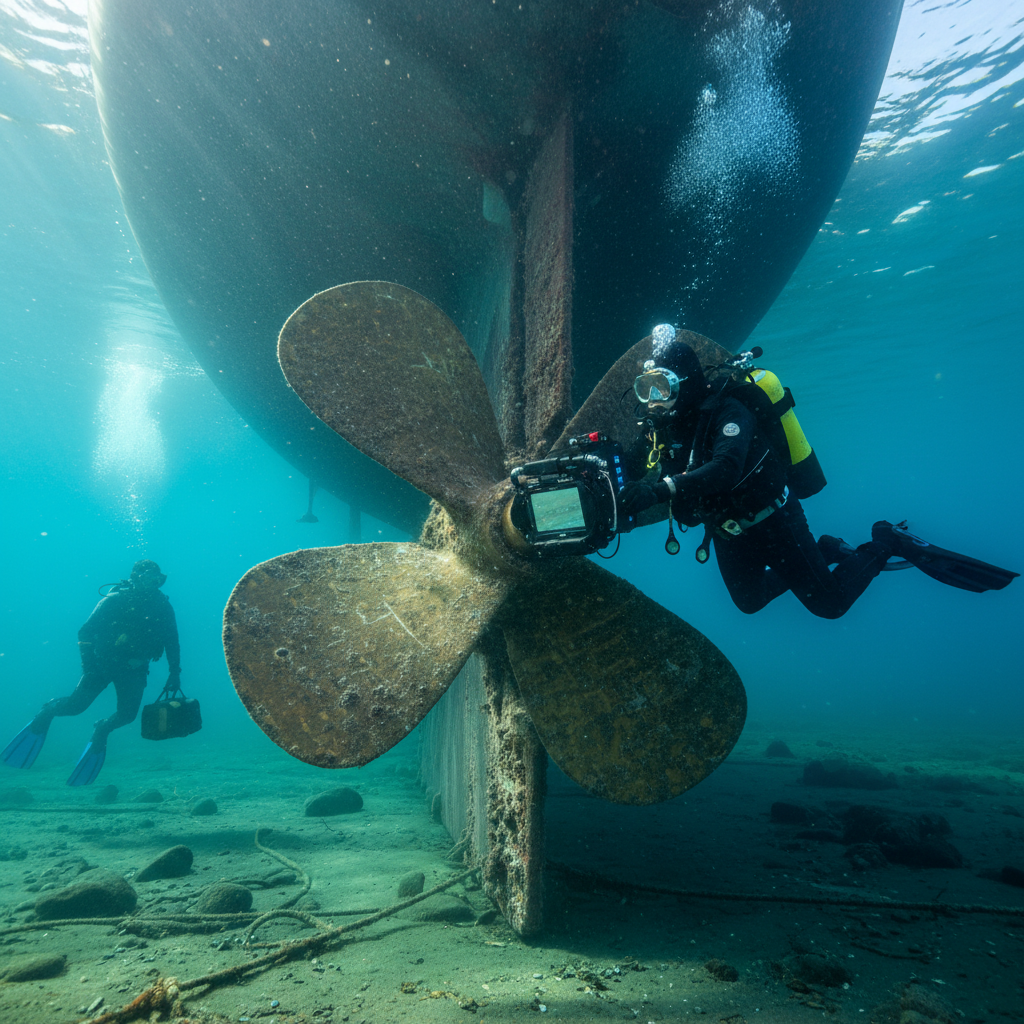
In the world of marine bio-fouling, timing is everything. There is a critical window where soft growth hardens into calcium-based shells that are much more difficult—and expensive—to remove without damaging your anti-fouling paint.
Moreover, modern eco-friendly anti-fouling coatings are designed to be cleaned gently. If you wait until you have a “reef” on your rudder, the aggressive scraping required will strip away your expensive bottom paint, leading to a cycle of even faster growth.
- Monthly Inspections: Catching growth in the “slime phase” preserves your paint.
- Zinc & Anode Checks: We inspect your zinc and corrosion protection during every dive.
- Propeller Maintenance: Even a few barnacles on a prop can cause cavitation and vibration.
Transitioning to a proactive model is the best way to inflation-proof your boating hobby. By investing in regular maintenance, you are essentially hedging against the volatility of the energy market.
Quantifying the ‘Invisible Drag’ on Your Engines
Sophisticated boat owners use RPM vs. Speed charts to identify hull cleaning fuel efficiency losses in real-time. If you find that you need 2400 RPM to hit a speed you used to achieve at 2100 RPM, the “fuel thief” is already at work under your waterline.
According to data from Boating Magazine, engine efficiency drops off a cliff when forced to operate outside of its optimal load parameters. This results in incomplete combustion, more soot in your oil, and a shorter engine lifespan.
Therefore, the ROI of a dive service isn’t just measured at the pump—it’s measured in the thousands of dollars saved on long-term mechanical repairs and the preservation of your vessel’s resale value.
The 360 Hull Diving Advantage: Transparency and Proof
We understand that for high-growth company leaders and busy executives, trust is earned through transparency. That is why our Bay Area dive team provides high-definition photo documentation of every service we perform. You don’t have to take our word for it; you can see the results for yourself.
- Fully Insured: We carry comprehensive marine liability insurance for your peace of mind.
- Eco-Friendly Practices: We adhere to all California ‘green’ hull cleaning regulations.
- Detailed Reporting: Every dive includes a condition report on your hull, zincs, and running gear.
Whether you are docked at the St. Francis Yacht Club or the South Beach Harbor, our team is committed to keeping your vessel at peak hydrodynamic performance. Don’t let bio-growth steal your fuel and your time on the water.
Frequently Asked Questions
How often should I schedule hull cleaning for fuel efficiency in the Bay Area?
For most recreational vessels in the San Francisco Bay, a 3-to-4-week cleaning cycle is optimal. This frequency prevents soft slime from transitioning into hard calcified growth, which maintains maximum hull cleaning fuel efficiency and protects your expensive bottom paint from aggressive cleaning methods.
Can a dirty hull really increase my fuel costs by 40%?
Yes, significant marine bio-fouling, particularly hard growth like barnacles on the hull and propellers, can increase hydrodynamic drag to the point where fuel consumption rises by 40% or more. Even a light slime layer can cause a 5-10% drop in fuel economy, making regular maintenance a high-ROI activity.
Does the location of my marina affect how fast growth accumulates?
Absolutely. Marinas like Sausalito and Richmond have different salinity, temperature, and nutrient profiles than the South Bay. Factors such as tidal flow and proximity to freshwater runoff can cause bio-growth to accumulate much faster in certain micro-climates, requiring customized maintenance schedules for boat maintenance costs Bay Area residents.
What is the benefit of getting photo proof with my dive service?
Photo proof provides transparency and ensures that the work was performed to a high standard. It allows you to monitor the condition of your anti-fouling paint and zinc anodes over time, helping you plan for future haul-outs and avoiding the “invisible drag” that leads to poor vessel performance monitoring results.